Who's Dictating When Everyone Is Preaching?
A critique of the crowded landscape of fashion advice, hot takes, and moral posturing online.
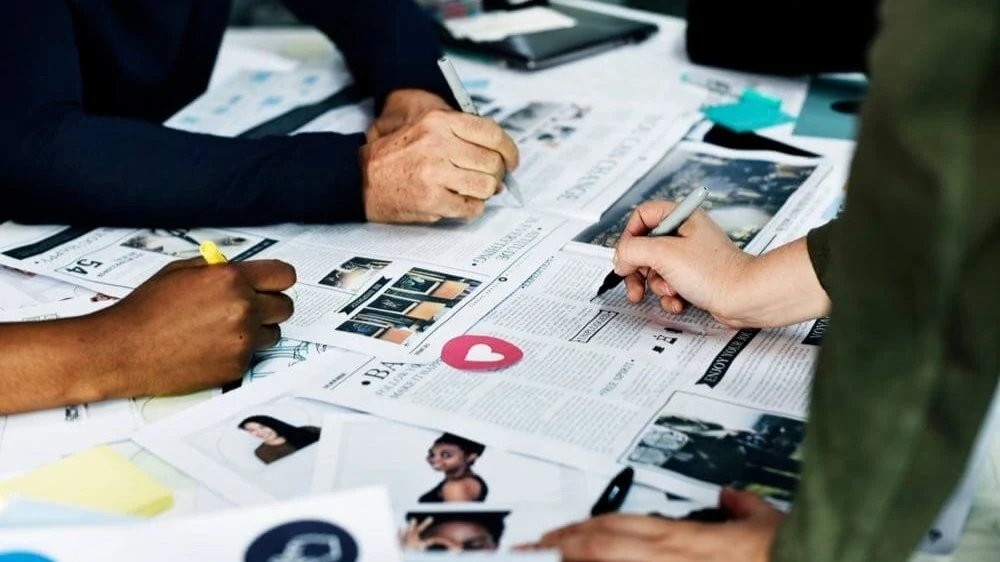
Who's Defining Trends Today? Designers, Data, or Social Media?
Traditionally, trend forecasting followed a trickle-down, structured model. Designers and fashion capitals dictated it all. Their collections, born purely from imagination and unfiltered by data, debuted on the grand stages of Fashion Weeks. Perhaps it was this raw creative instinct—uncurated by analytics—that made them so innovative and impactful.
Editors, buyers, and forecasting agencies decoded these looks and released curated trend reports. Retailers followed, and consumers consumed. The cycle was exclusive, hierarchical, and linear.
But that timeline has been shattered.
Today, trend forecasting is fast, fragmented, and fundamentally democratic. Platforms like Instagram, Pinterest, and TikTok are the new showrunners—where microtrends emerge overnight and vanish by the end of the week. Influencers' GRWMs (Get Ready With Me videos) are the new runways. Consumers, especially Gen Z, aren't waiting to be told what's in — they're deciding it for themselves, often before the runway even sets the tone.
As fashion's traditional timeline collapses, AI and data forecasting tools have taken center stage, making trend analysis a matter of seconds. Companies like Stylumia and Nextatlas track consumer behavior, social sentiment, e-commerce trends, and even image recognition to predict what people will want next. This is no longer just trendspotting — it's trend simulation.
Forecasters today combine qualitative intuition with quantitative insight. Traditional agencies still study color theory and cultural shifts, but now they also tap into real-time data streams. Virality is a metric. Engagement is a signal. The trend report is no longer annual — it's updated weekly, if not daily.
While human creative instinct still holds power today, the real question is: to what extent?
Who Really Has the Power?
Let's break it down:
Designers still carry cultural weight, especially in luxury fashion. But even they are increasingly reacting to trends rather than creating them in isolation. Instagram & TikTok are defining microtrends—think coquette core, blokette, clean girl, or ballet revival—at a dizzying pace. These platforms often determine what moves from niche to norm. Pinterest acts as a visual search engine for aesthetics, where moodboards silently influence buying and design decisions long before a trend "breaks." Trend Forecasting Agencies are evolving. Many now offer hybrid models that blend cultural research with algorithm-driven predictions. AI & Tech are supercharging the speed, scope, and precision of forecasting. But even the smartest systems still need a human eye to contextualize what matters culturally, ethically, and emotionally.
A Loop, Not a Ladder
Today, fashion operates in a feedback loop, not a hierarchy.
A celebrity wears something → fans imitate it on social media → it goes viral → fast fashion brands replicate it → forecasting agencies pick it up → designers reinterpret it → and the cycle continues. Often, no one knows where it started — only that it's trending.
Fashion no longer dictates from above. It negotiates in real time. Trends today are shaped by designers, data, digital influencers and you, the consumer. It's chaotic, yes. But it's also collaborative. What was once an exclusive process is now radically participatory.
Forecasting no longer means predicting the future in isolation. It means understanding signals from everywhere: runways, resale markets, memes, search bars, shopping carts, and street corners.
Or is this newfound democracy just an illusion? Are forecasters still quietly steering the ship — curating collections, shaping feeds, and fine-tuning the algorithms that shape what we see next?