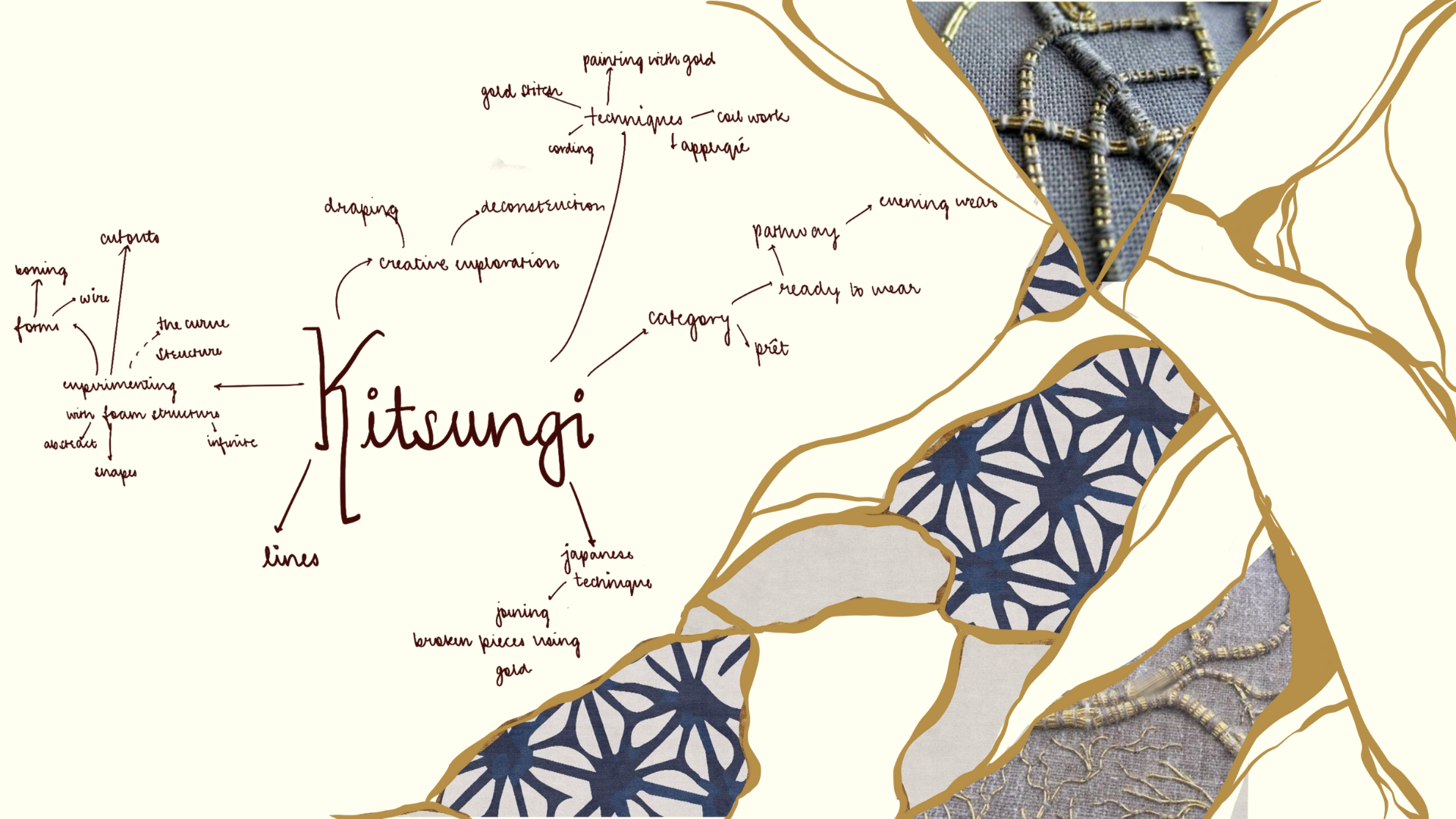
Deconstruction / draping / visible repair
KINTSUGI
The Art of Repair
A collection about repair as history—not something to hide, but a visible record of pressure, change and continuation.

Repair changes the object.
That is the point.
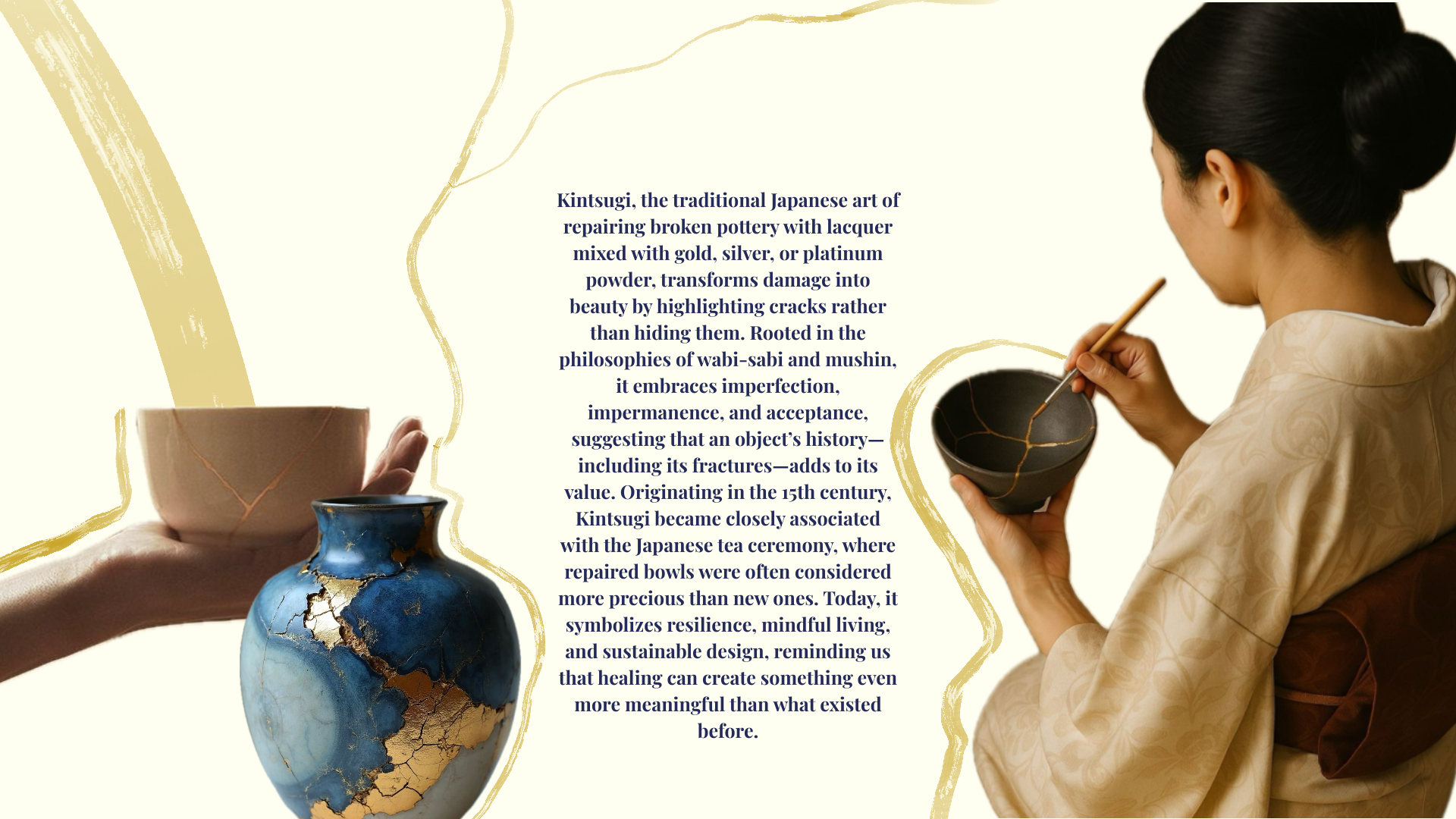
Kintsugi begins with the Japanese practice of repairing broken pottery with lacquer and precious metal. The repair is allowed to remain legible: damage becomes part of the object’s history instead of a flaw that must disappear.
The collection translates that principle into clothing through deconstruction, gold-highlighted seams, drape and wire-built form. Wabi-sabi and mushin become a way of designing with imperfection rather than designing around it.
Research / 02
Fracture,
body, space.
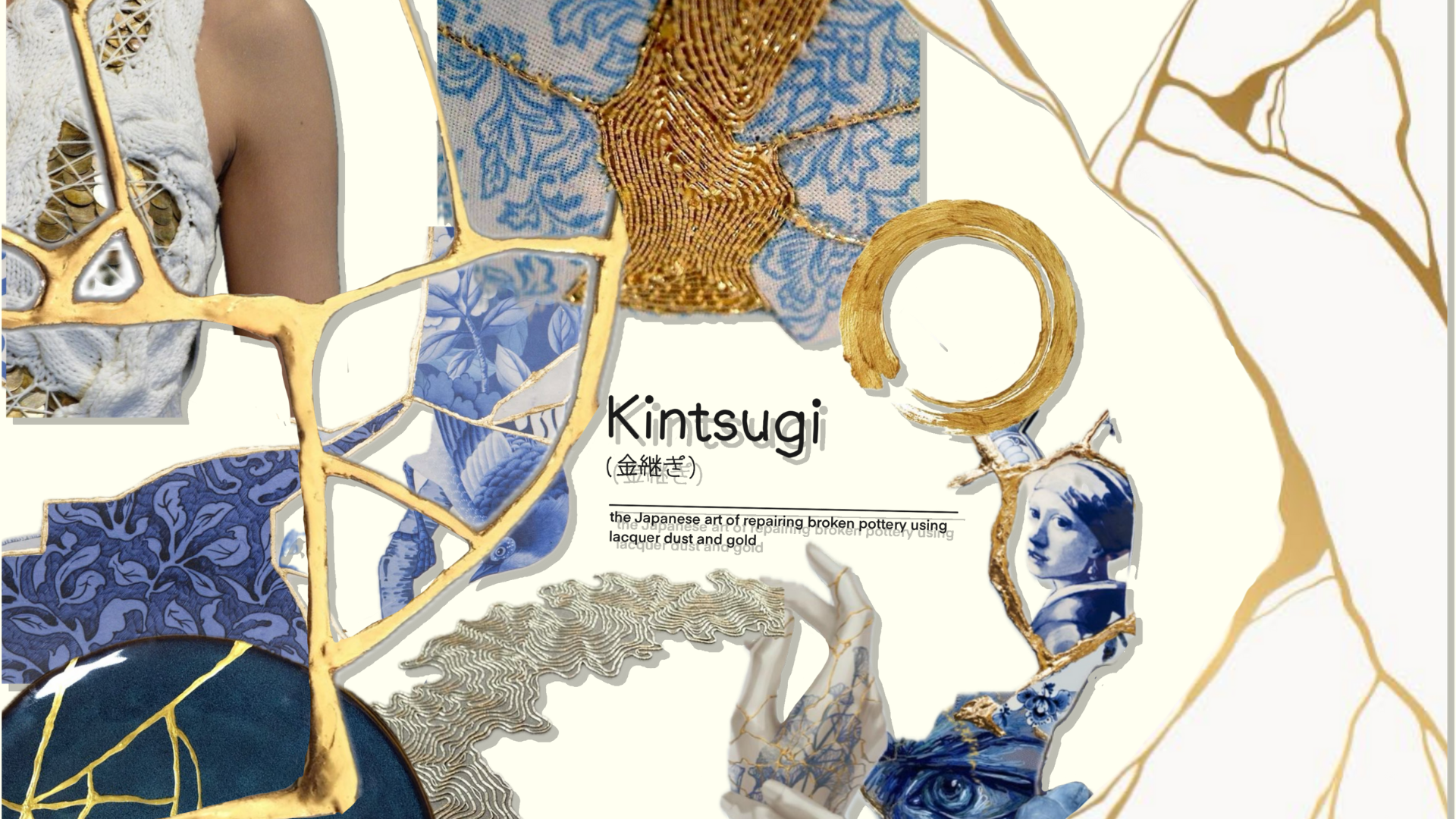
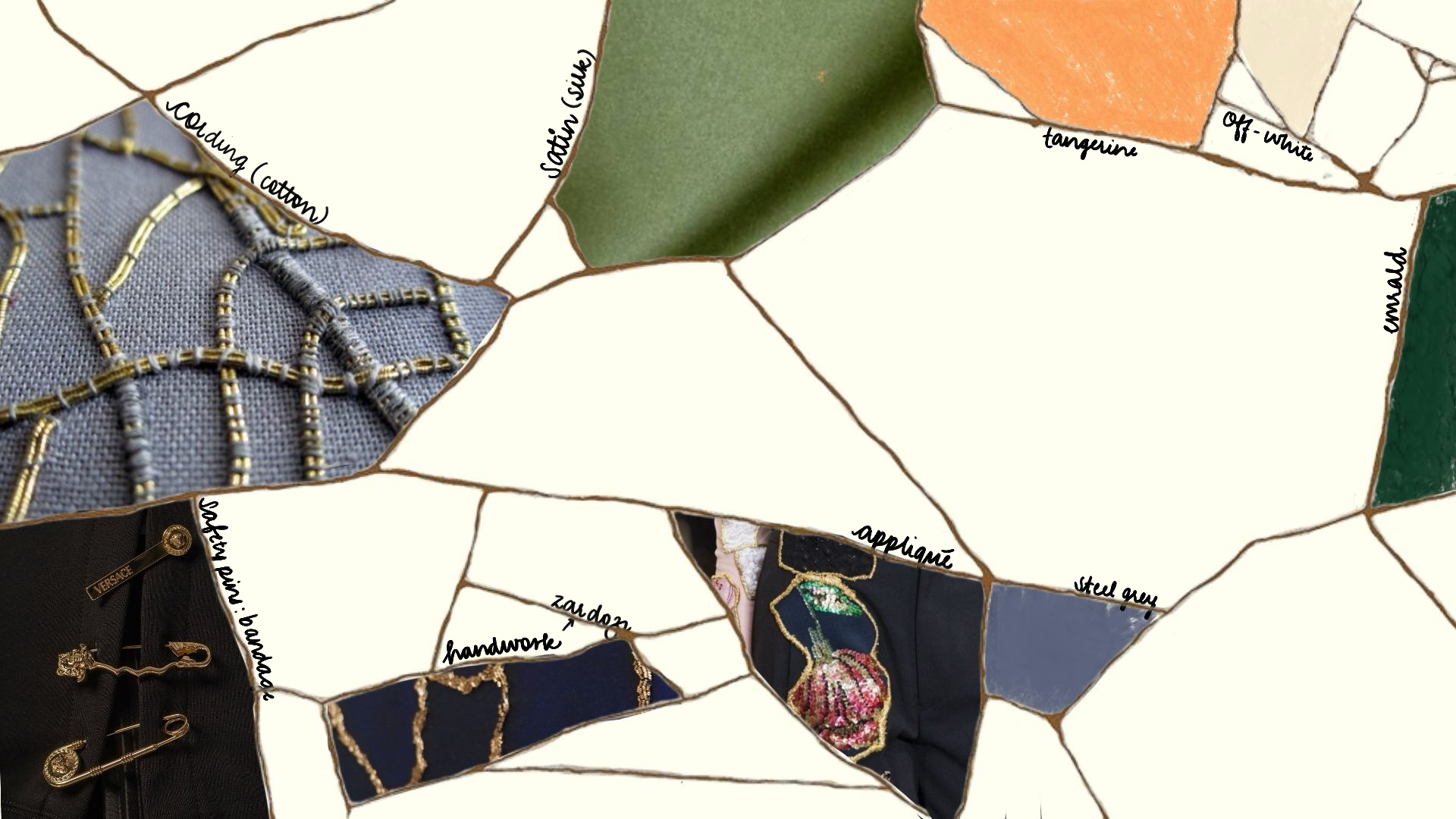
Instead of repeating every folio page, the research is kept as three distinct pieces of evidence: the concept map, the visual field, and the history behind the repair.
In the making / 03
Let the seam
tell on itself.
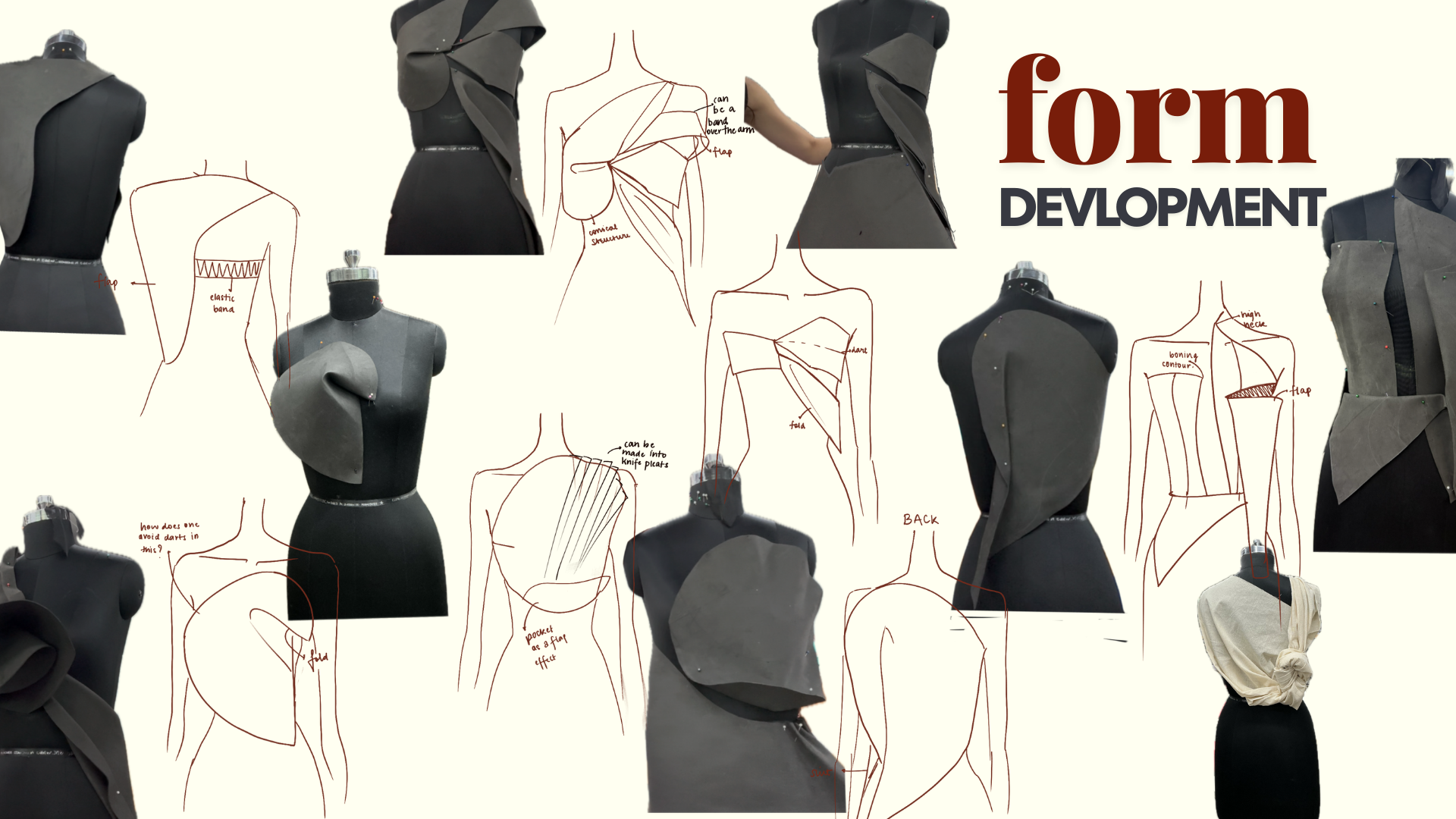
Form is developed on the stand, broken apart, redrawn and held together again. Gold becomes a line of evidence rather than ornament.

Collection development / 04
From broken line
to silhouette.
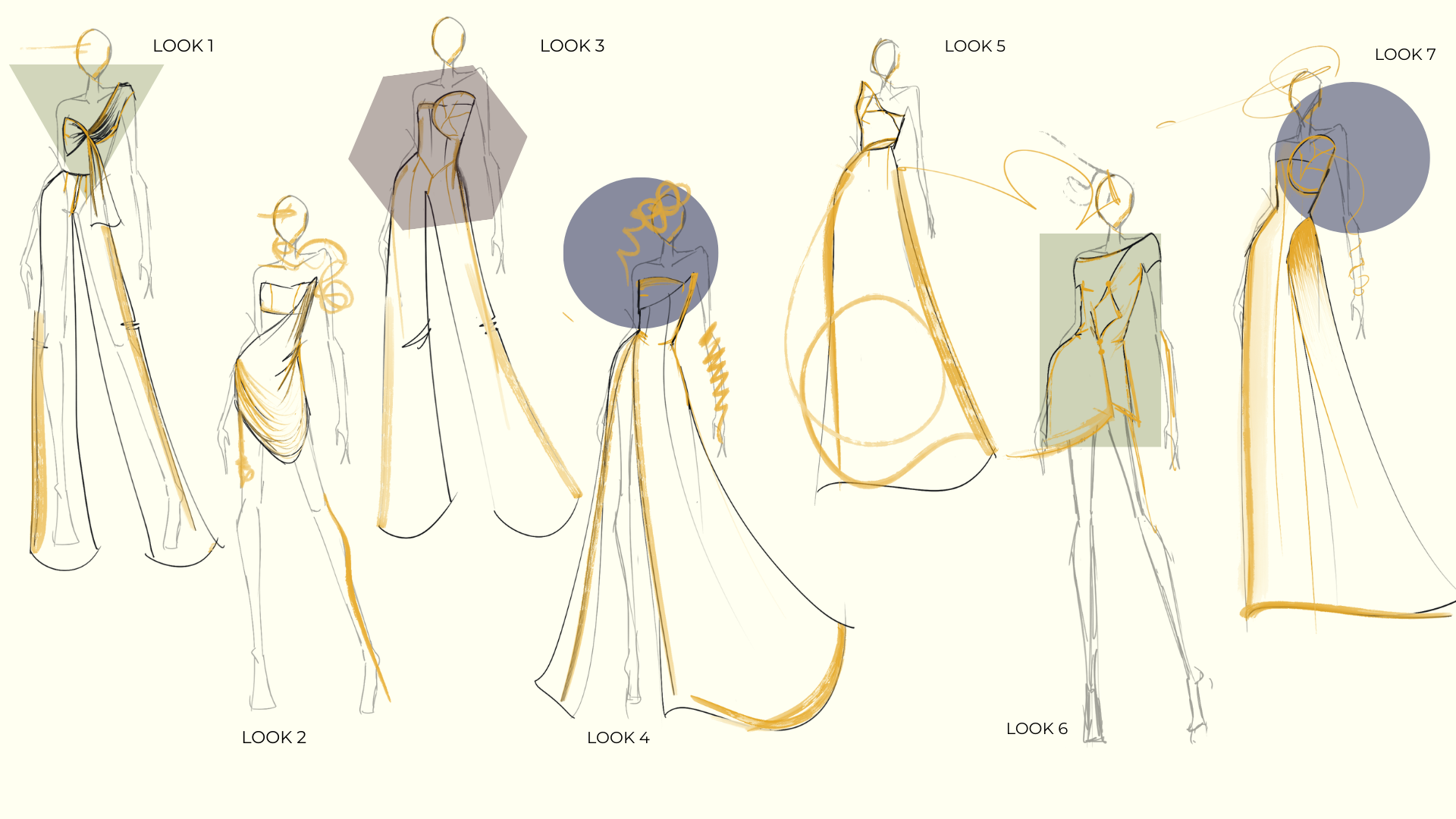
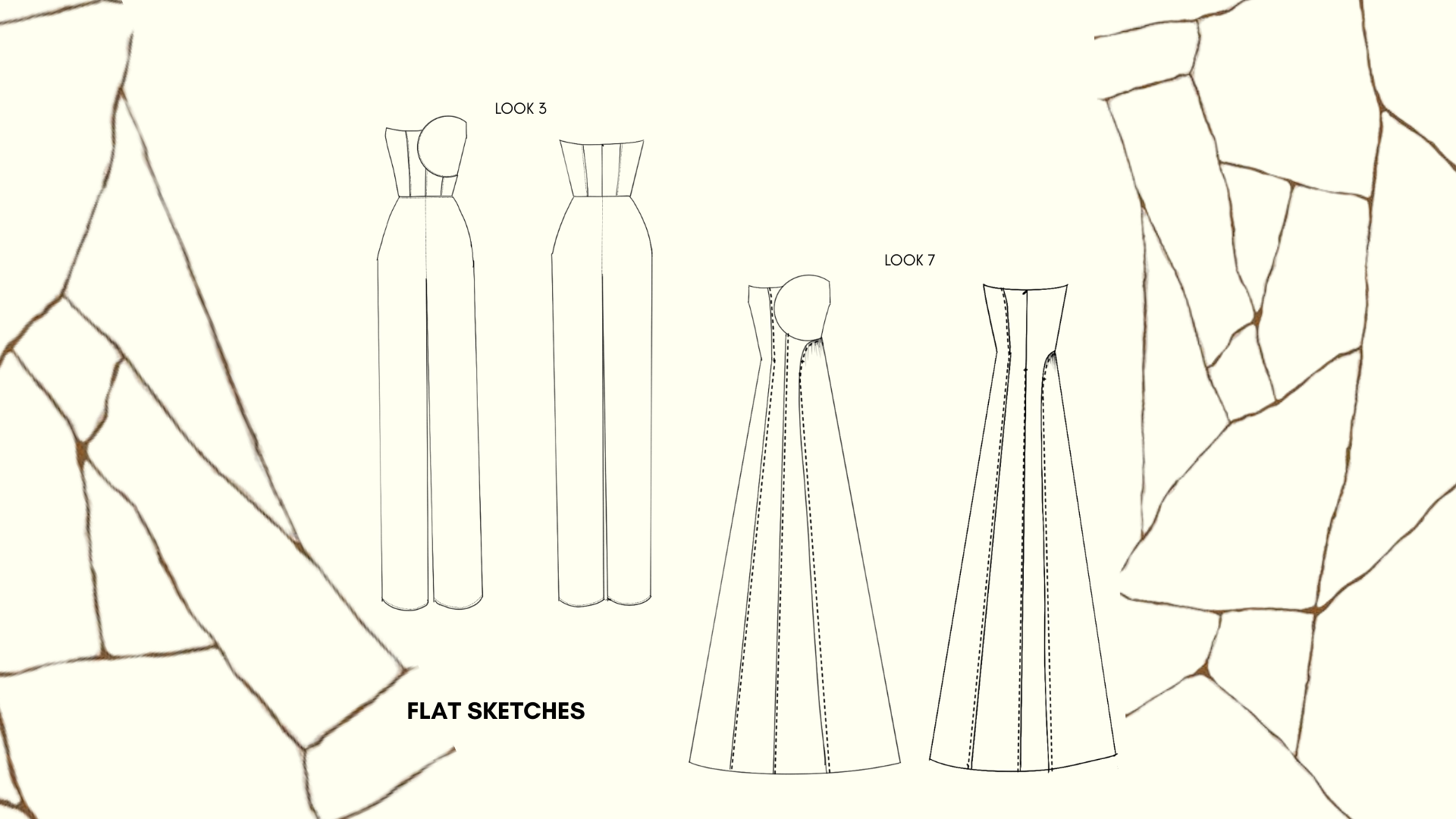
The line-up and flat sketches are shown at working scale so the development remains readable, not reduced to thumbnails.

Final garment / 05
The repair
at full scale.