Beyond the expected kaftan.
Youthful, easy and slightly sensual resort dressing that feels culturally rooted without relying on bohemian shorthand.
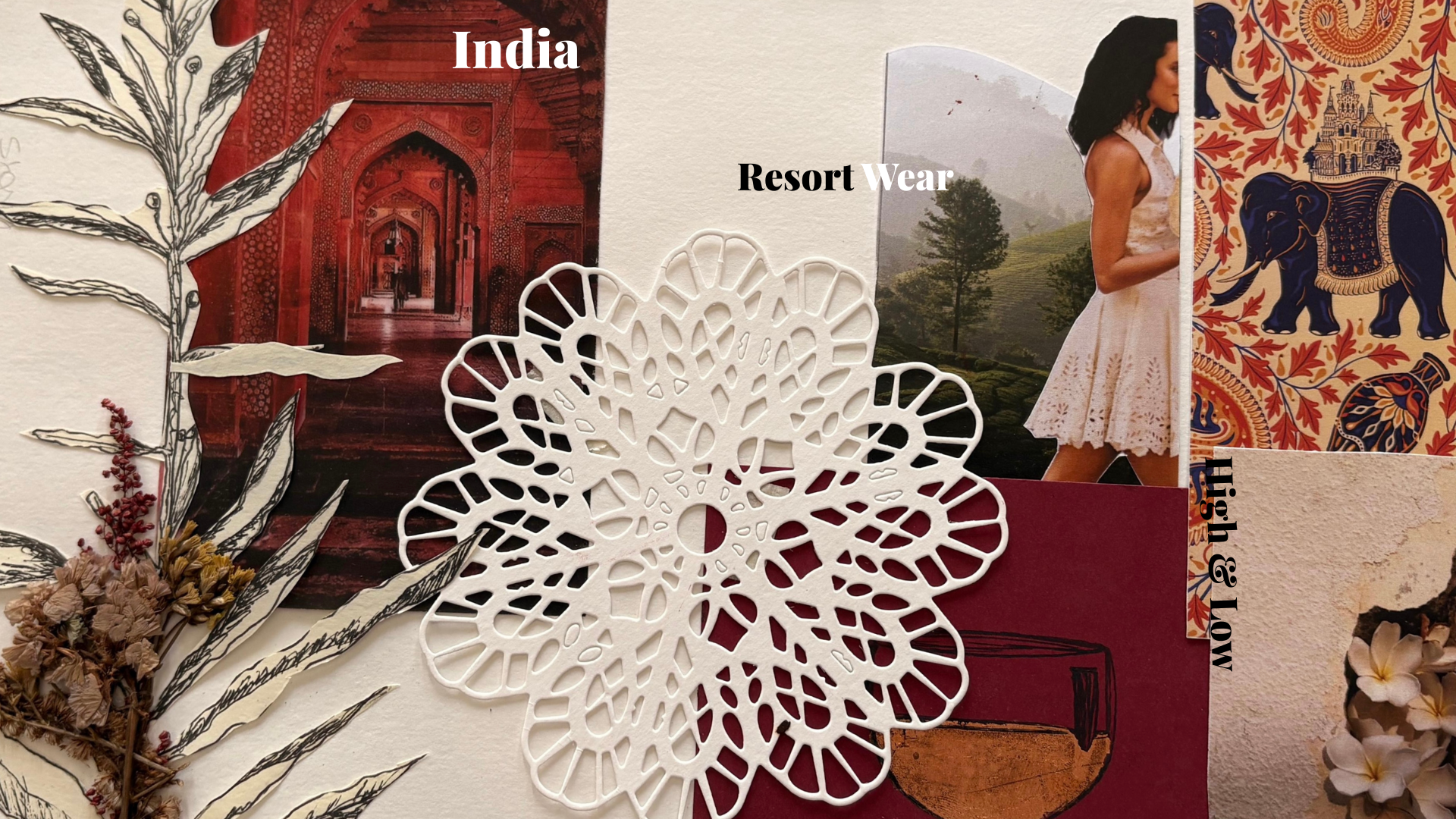
Resort wear / memory / material
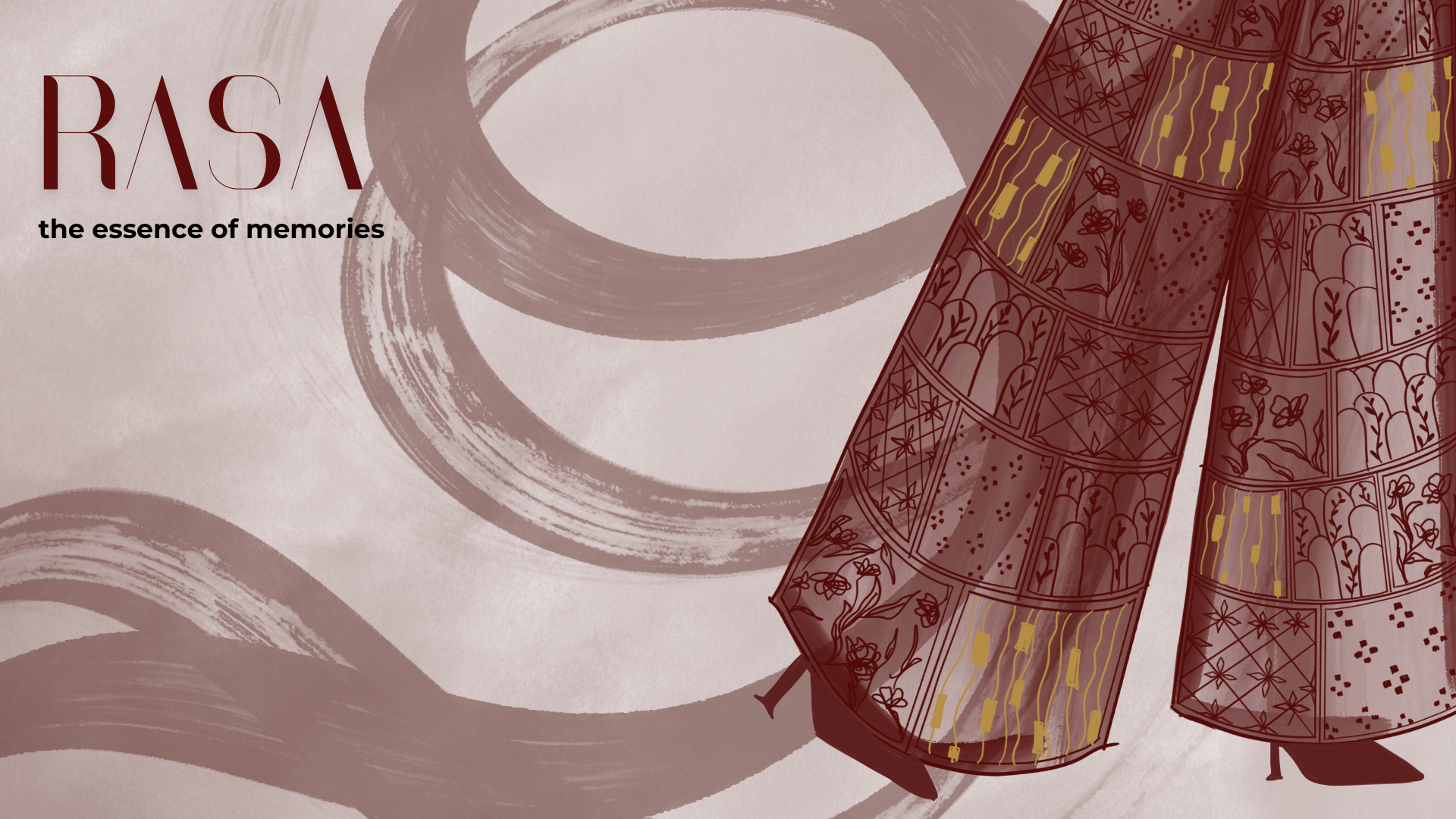
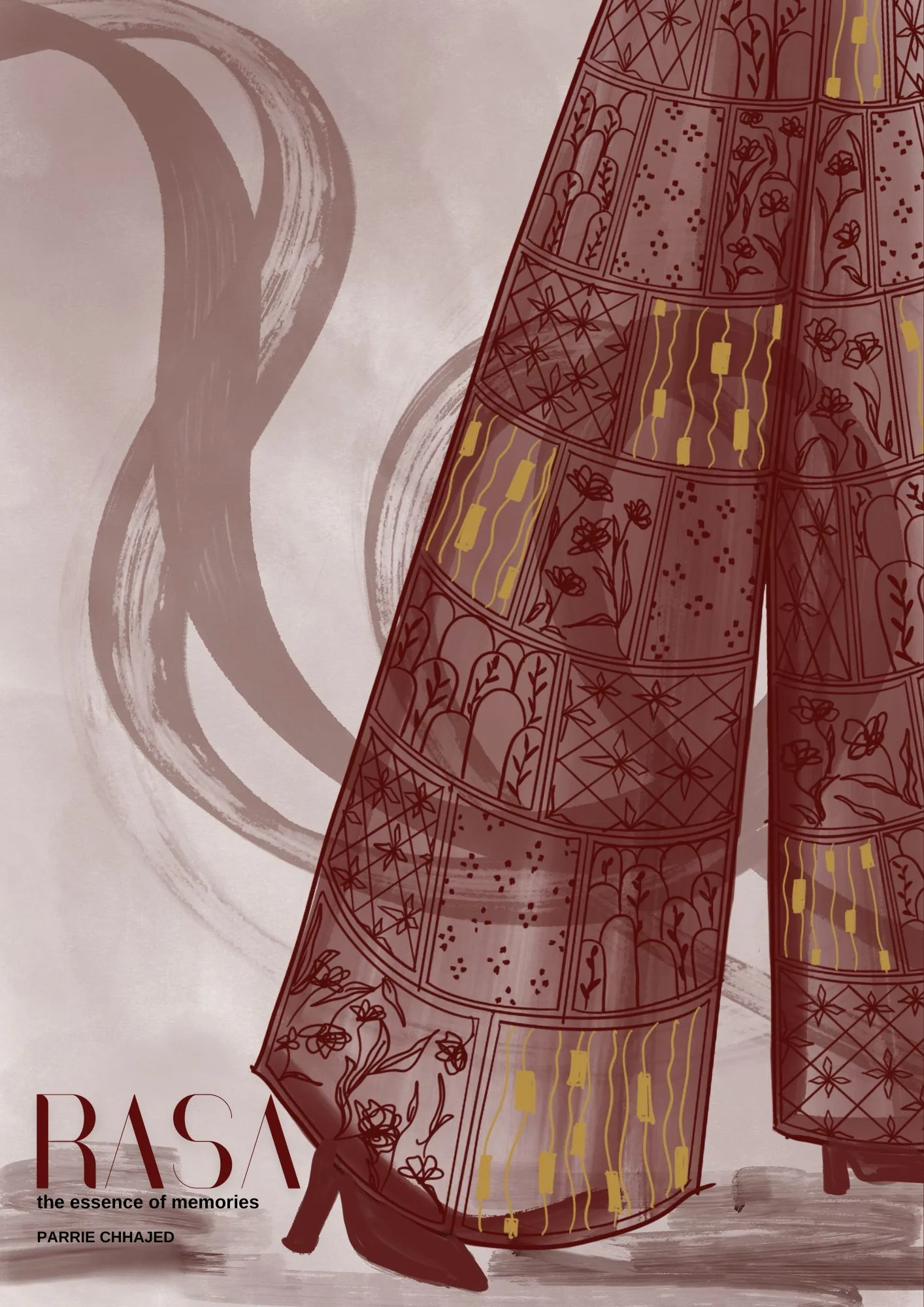
The essence of memories
A resort-wear thesis about what time leaves behind—in a place, a material, a memory and a garment.
The premise
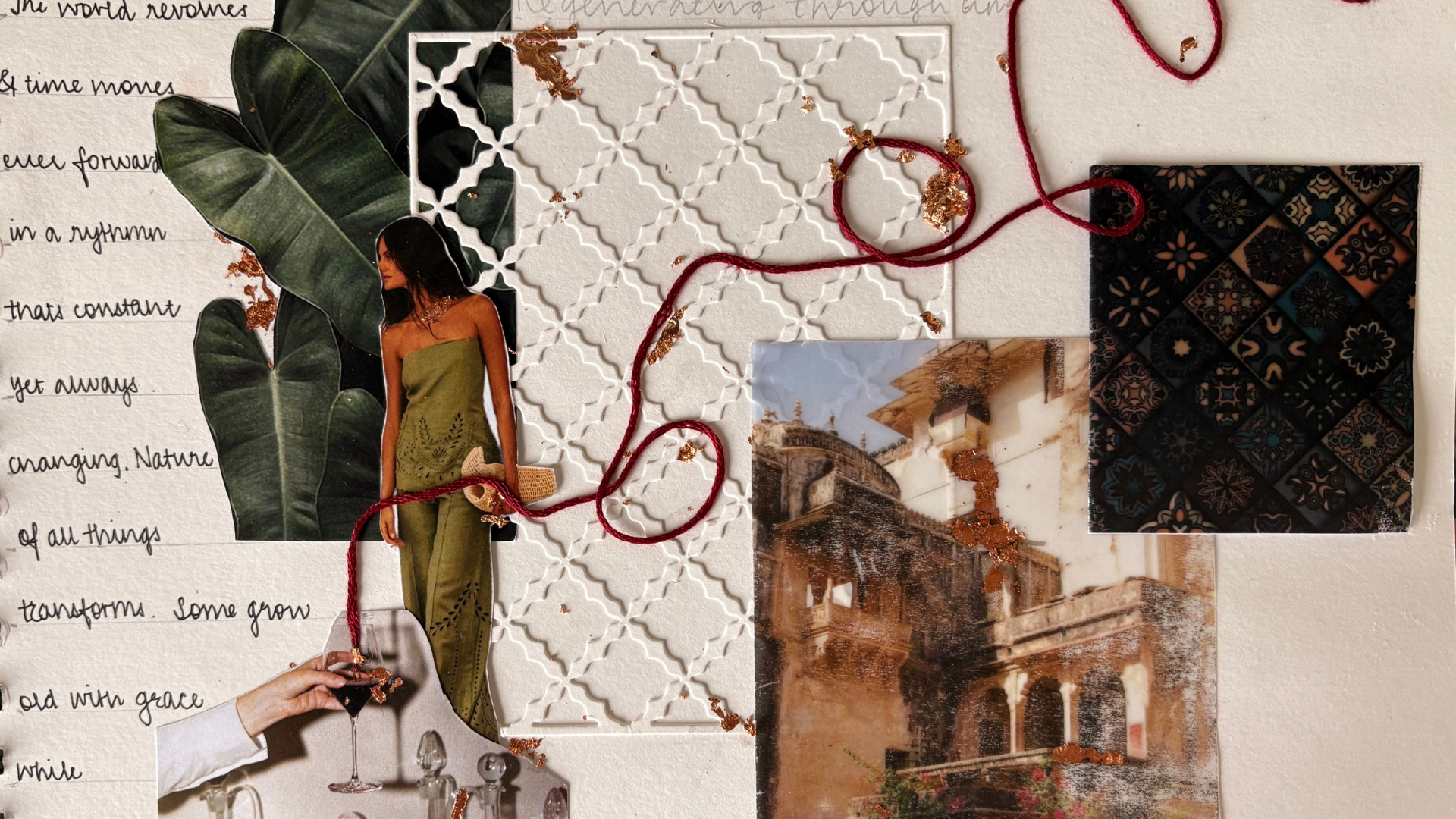
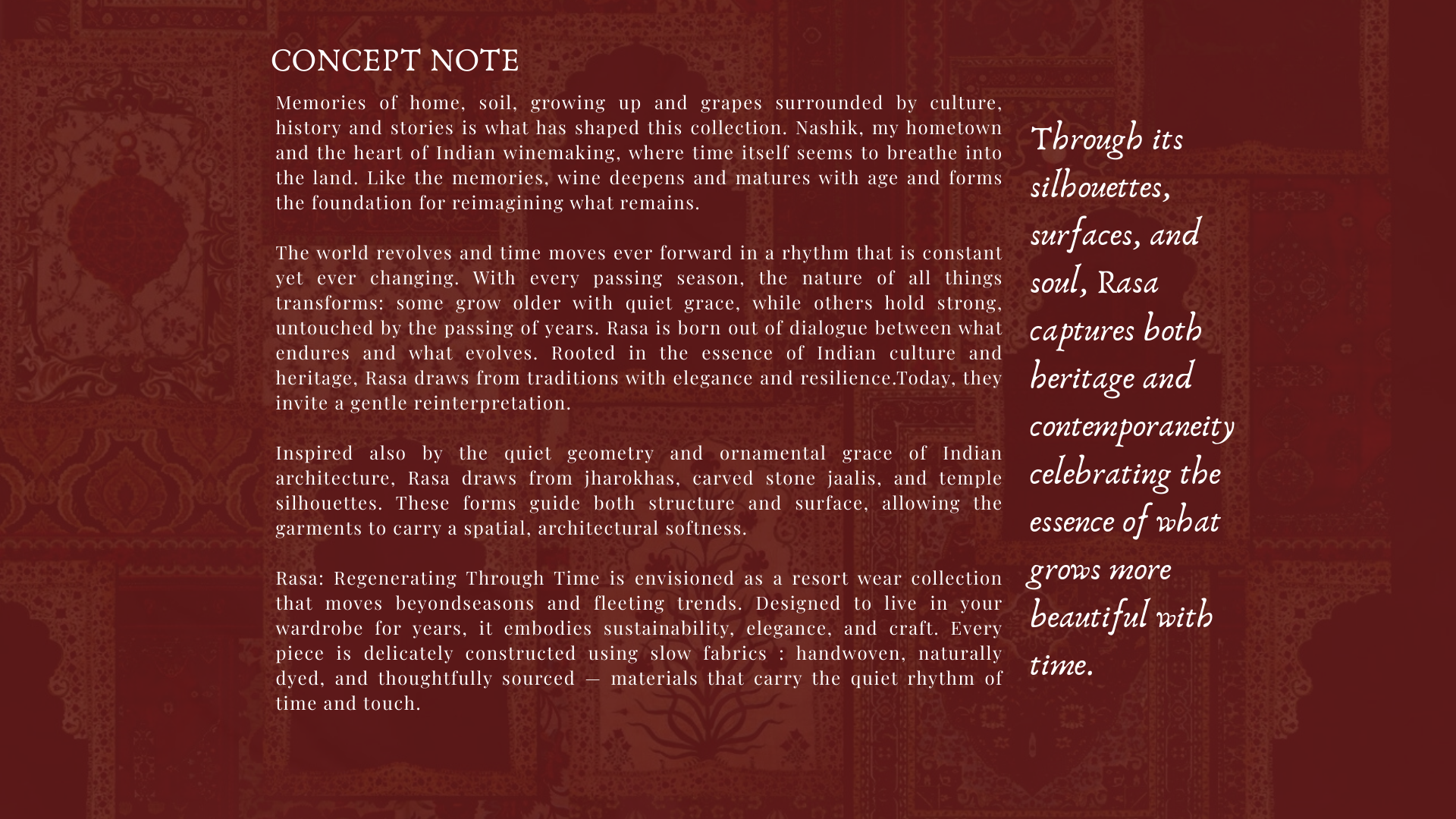
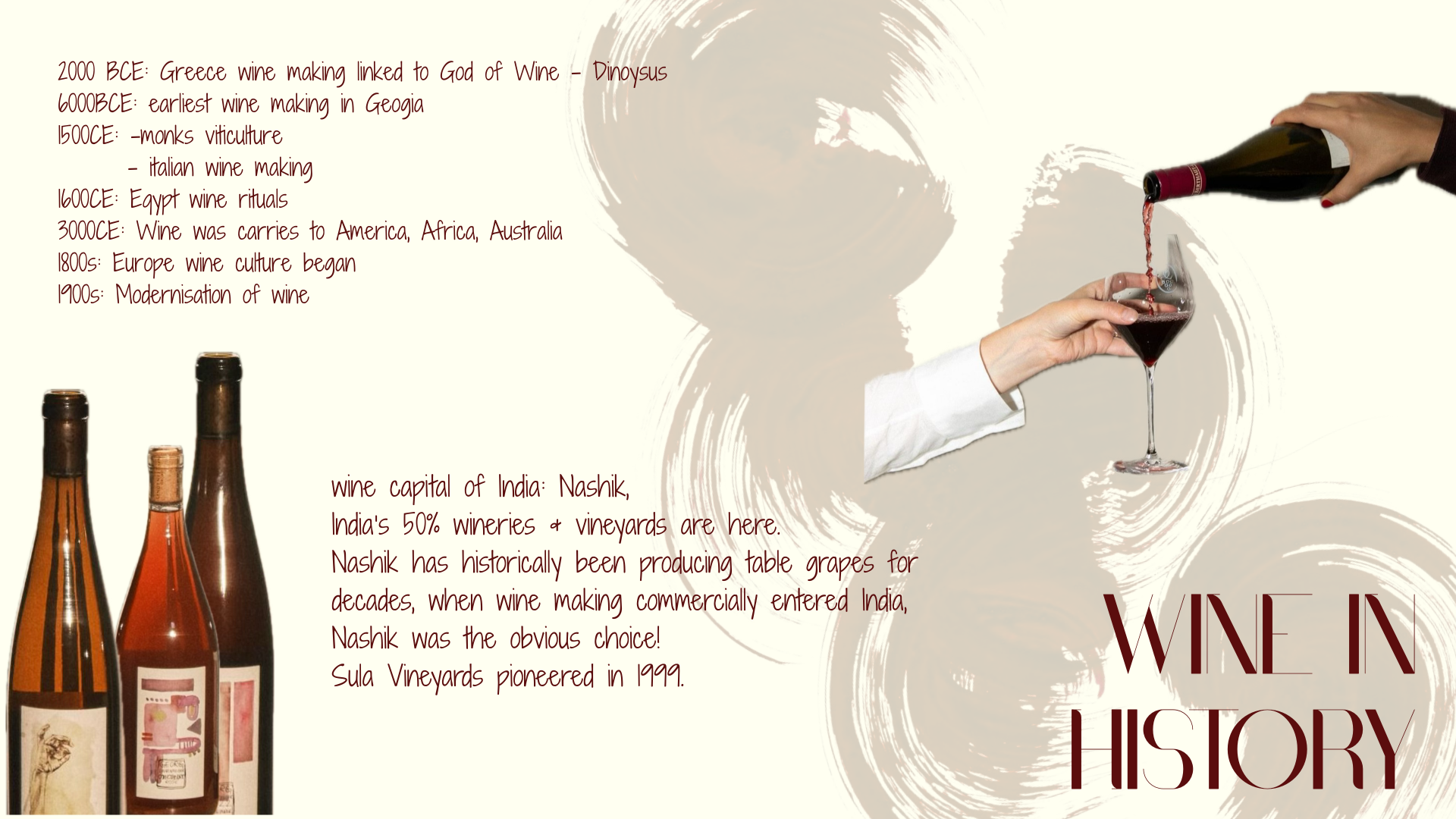
RASA begins in Nashik: with home, soil, vineyards and memories attached to growing up in India’s wine country. Wine became a way to think about ageing—something that changes, deepens and gains character rather than simply becoming old.
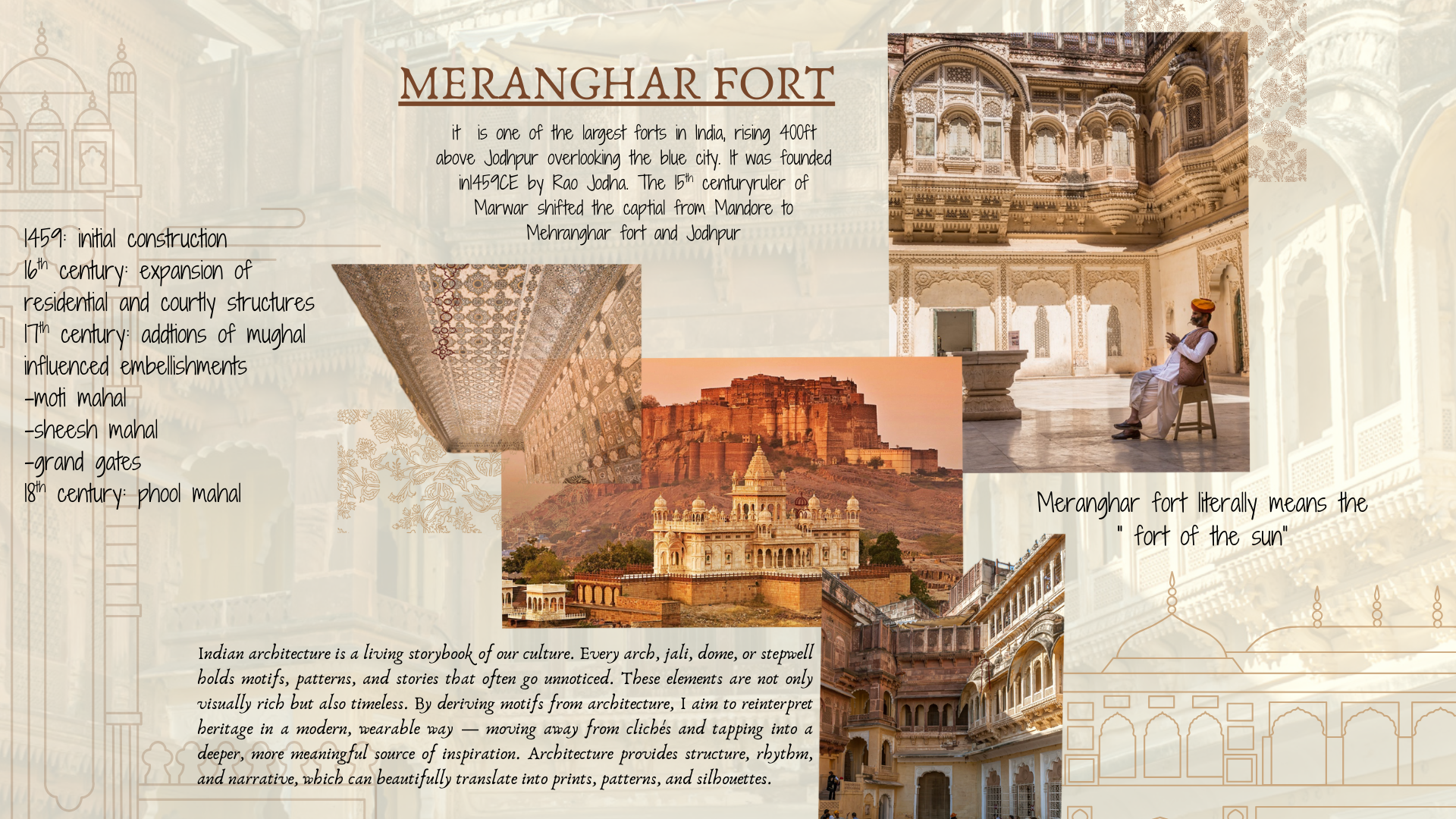
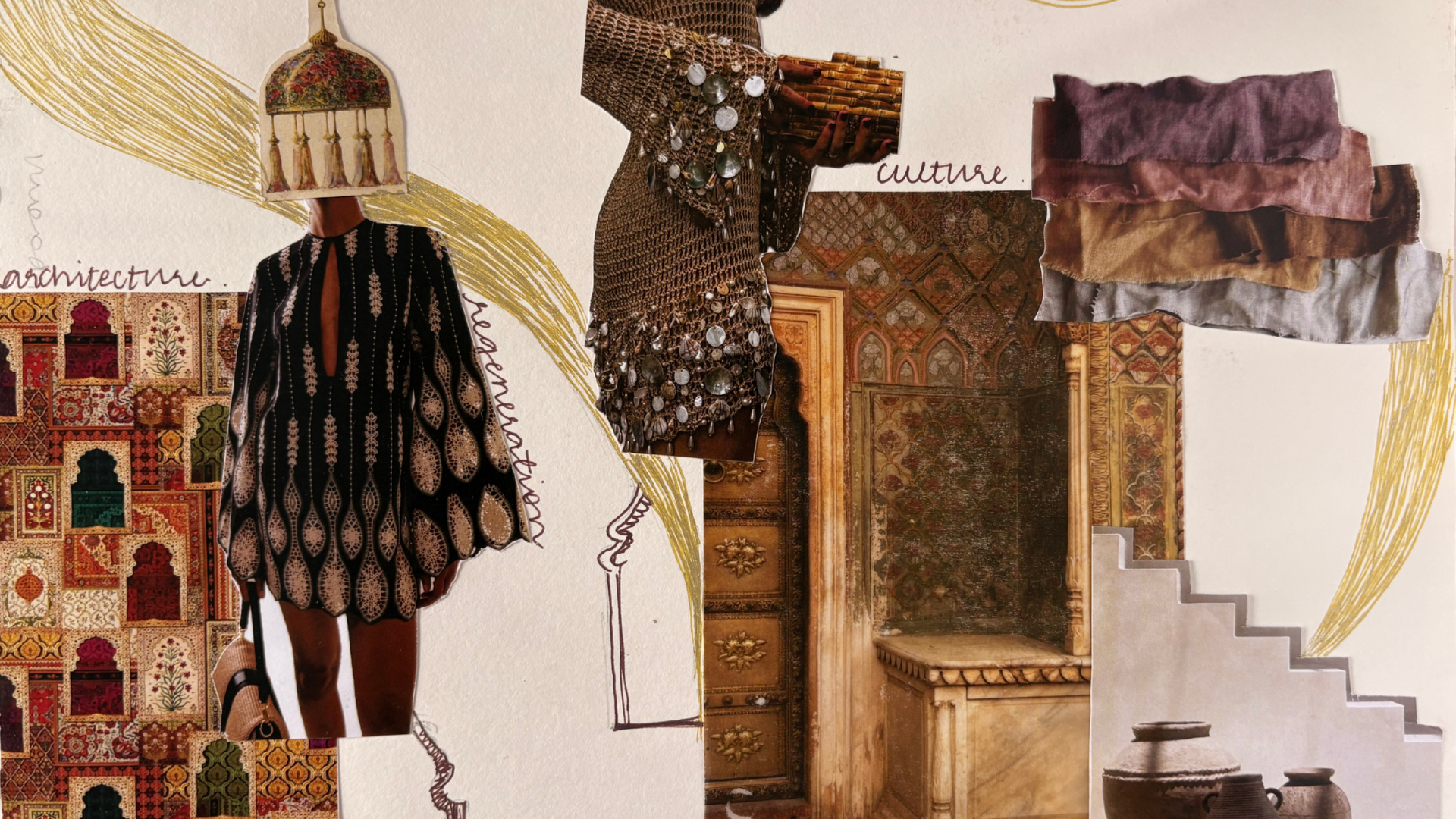
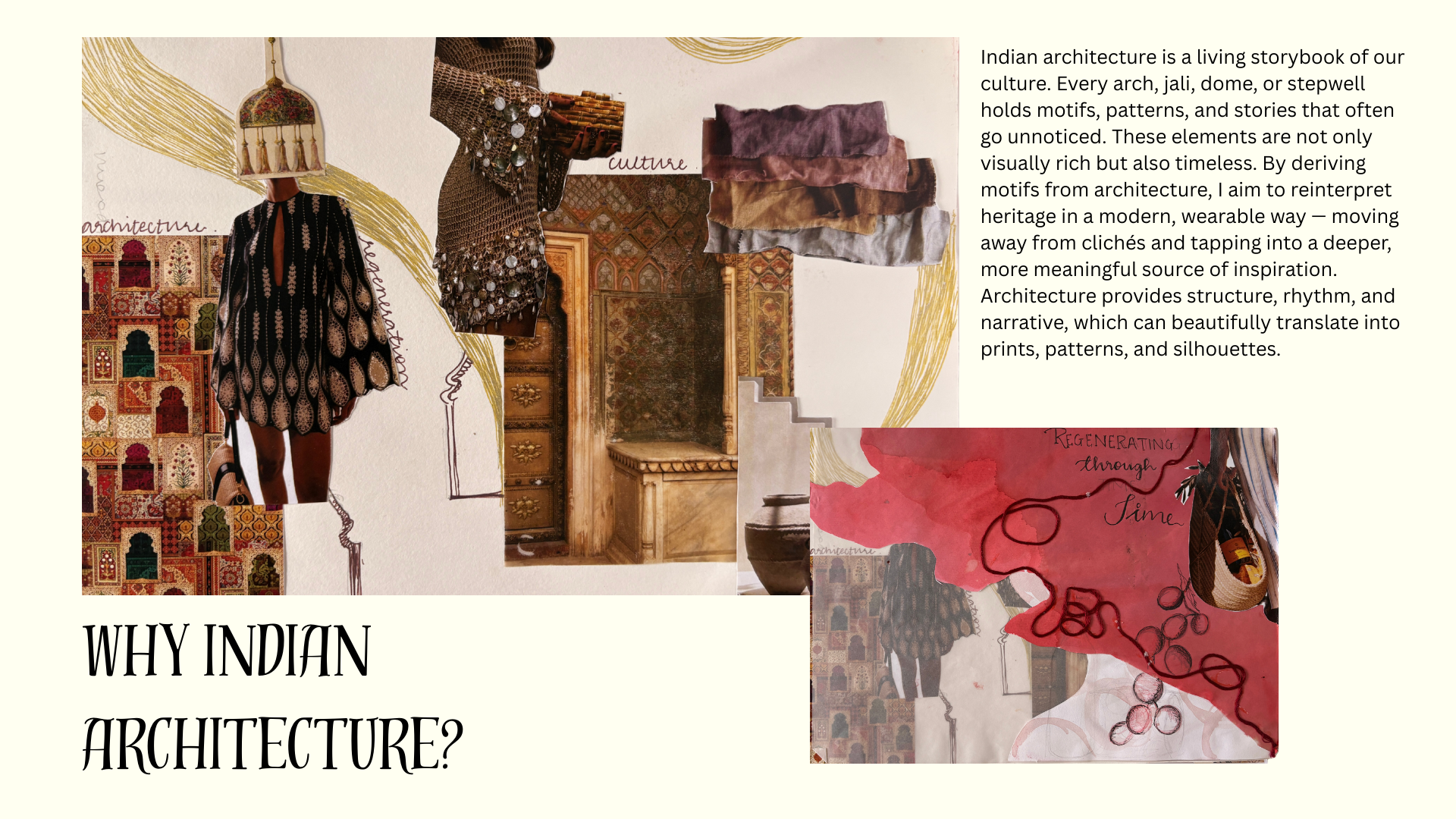
The collection pairs that idea with Indian architecture. Jharokhas, carved jaalis, fort silhouettes and ornamental geometry inform structure and surface, while slow fabrics and hand processes keep the garments soft, lived-in and contemporary.
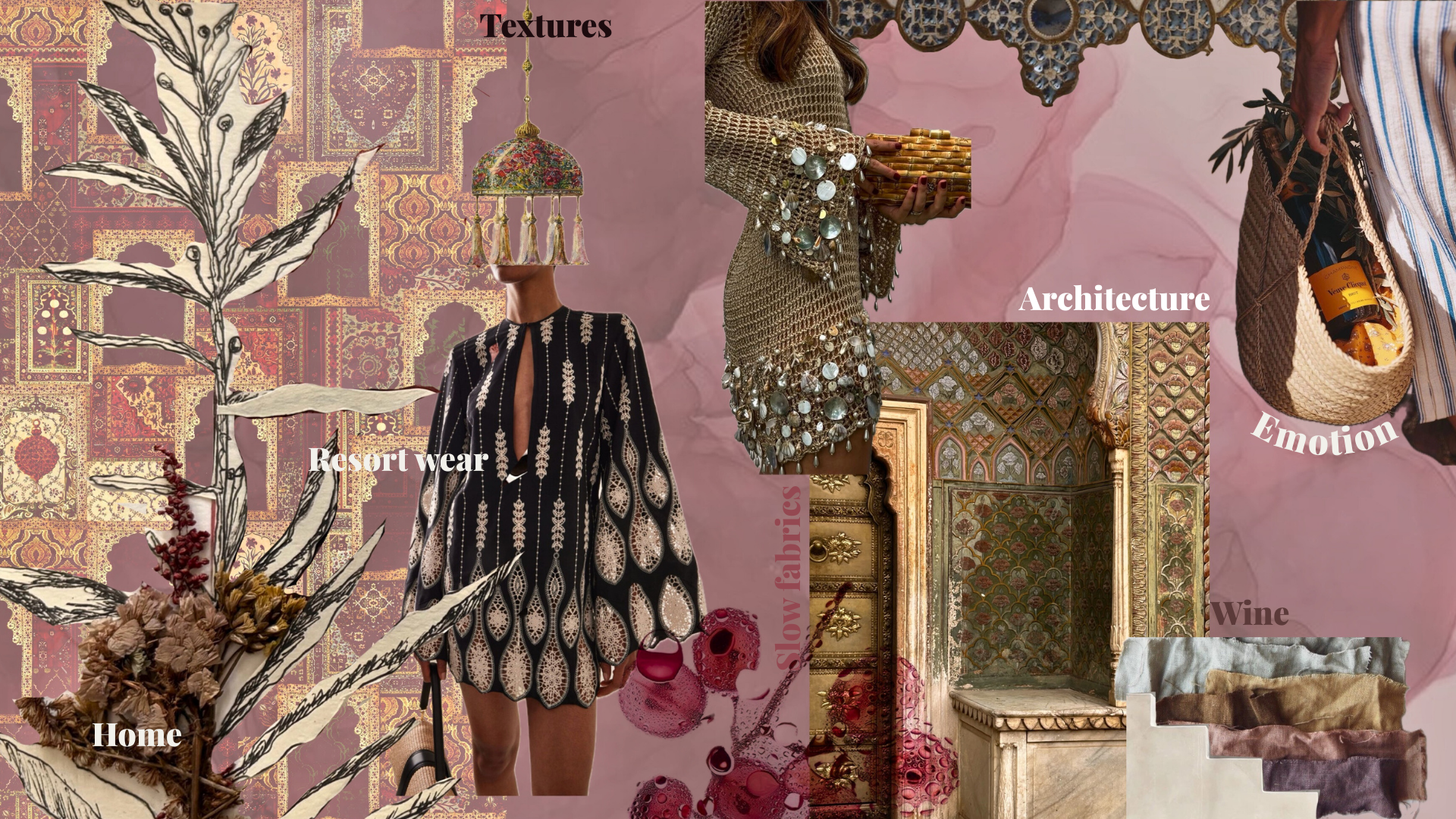
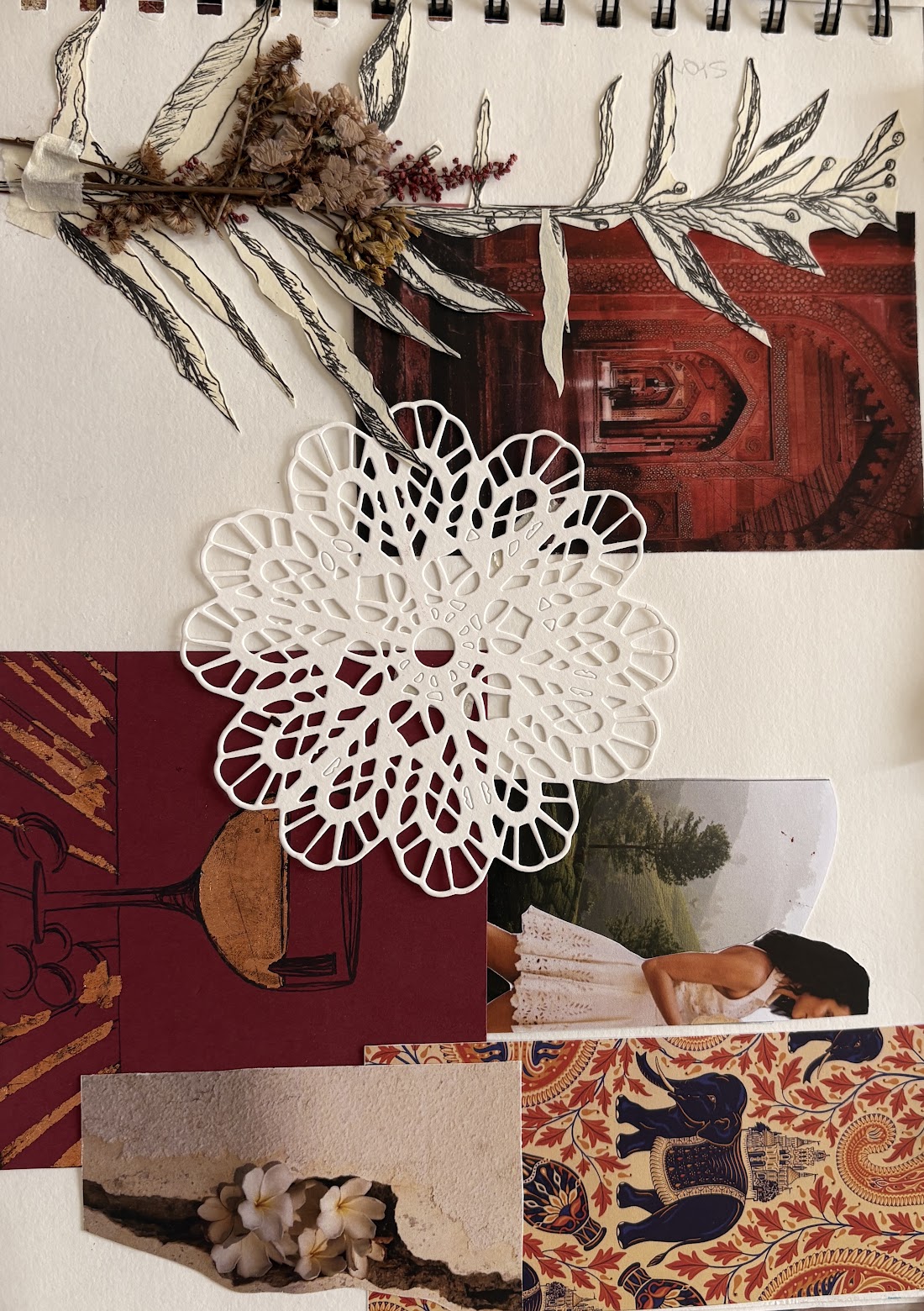
Both wine and architecture taught me the same thing—patience makes things beautiful.
Why RASA?
why resort wear? why wine?
why architecture? why me?
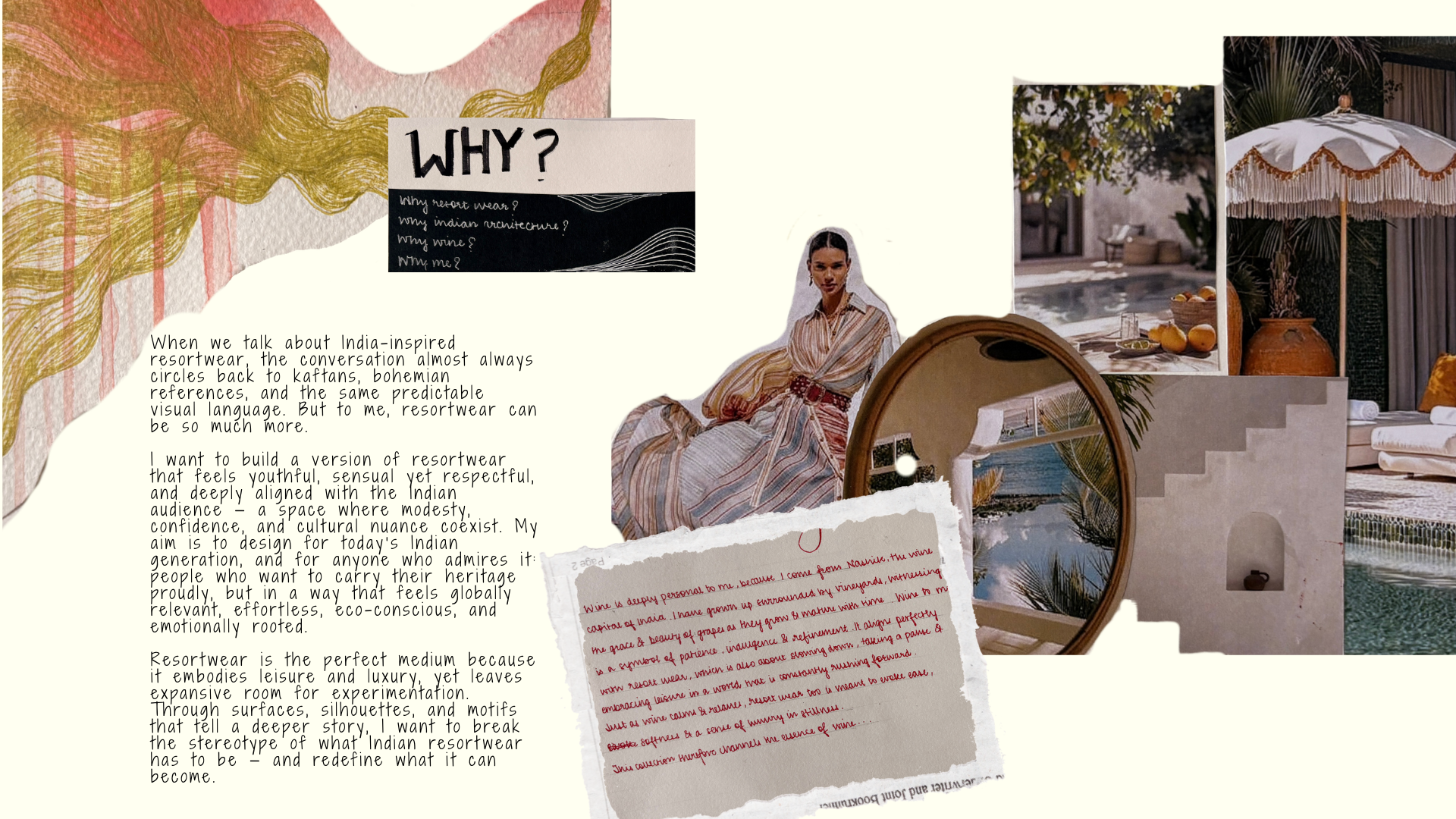
Youthful, easy and slightly sensual resort dressing that feels culturally rooted without relying on bohemian shorthand.
Growing up around Nashik’s vineyards made wine personal. Its patience, staining and quiet luxury became both concept and process.
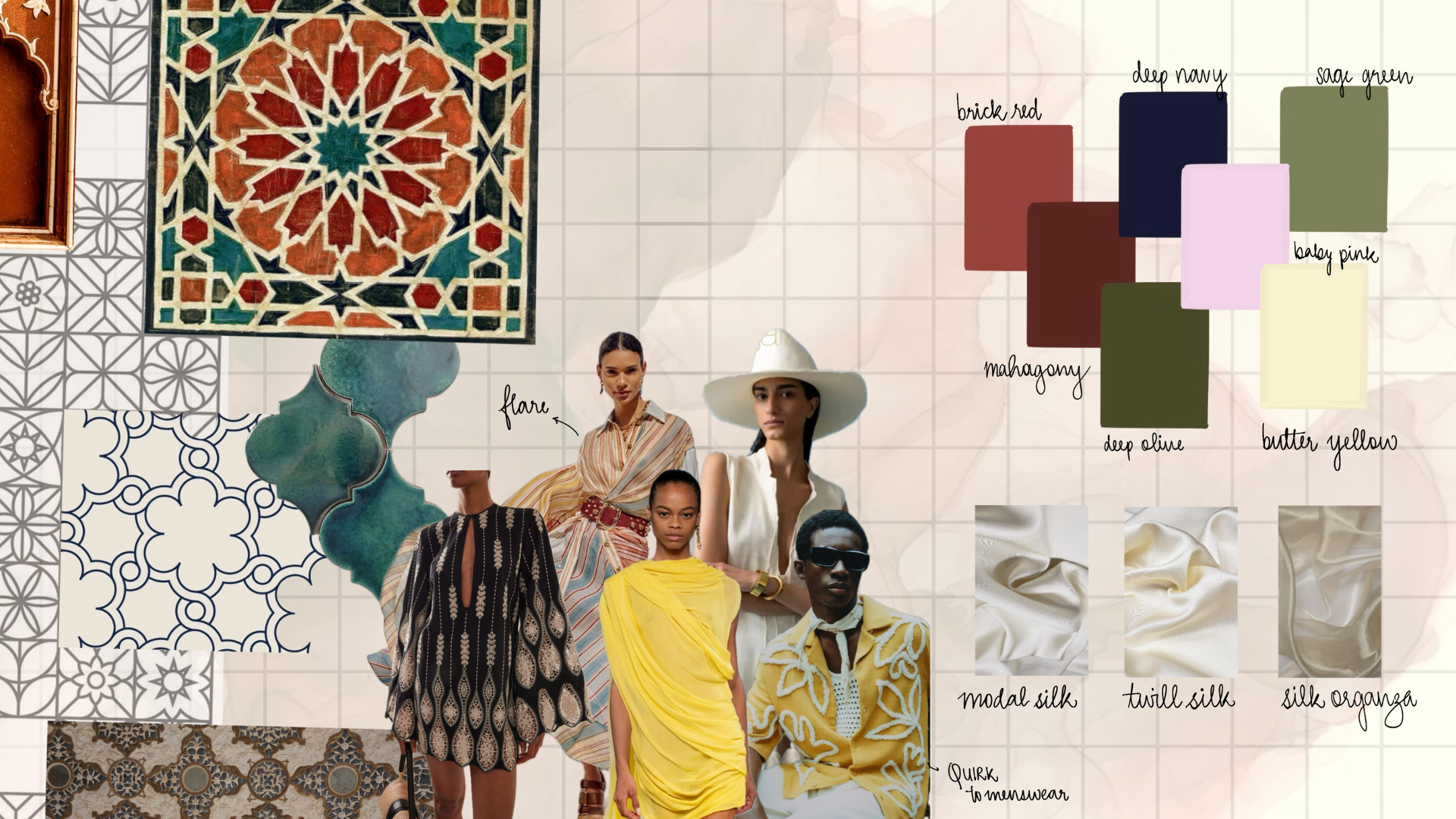
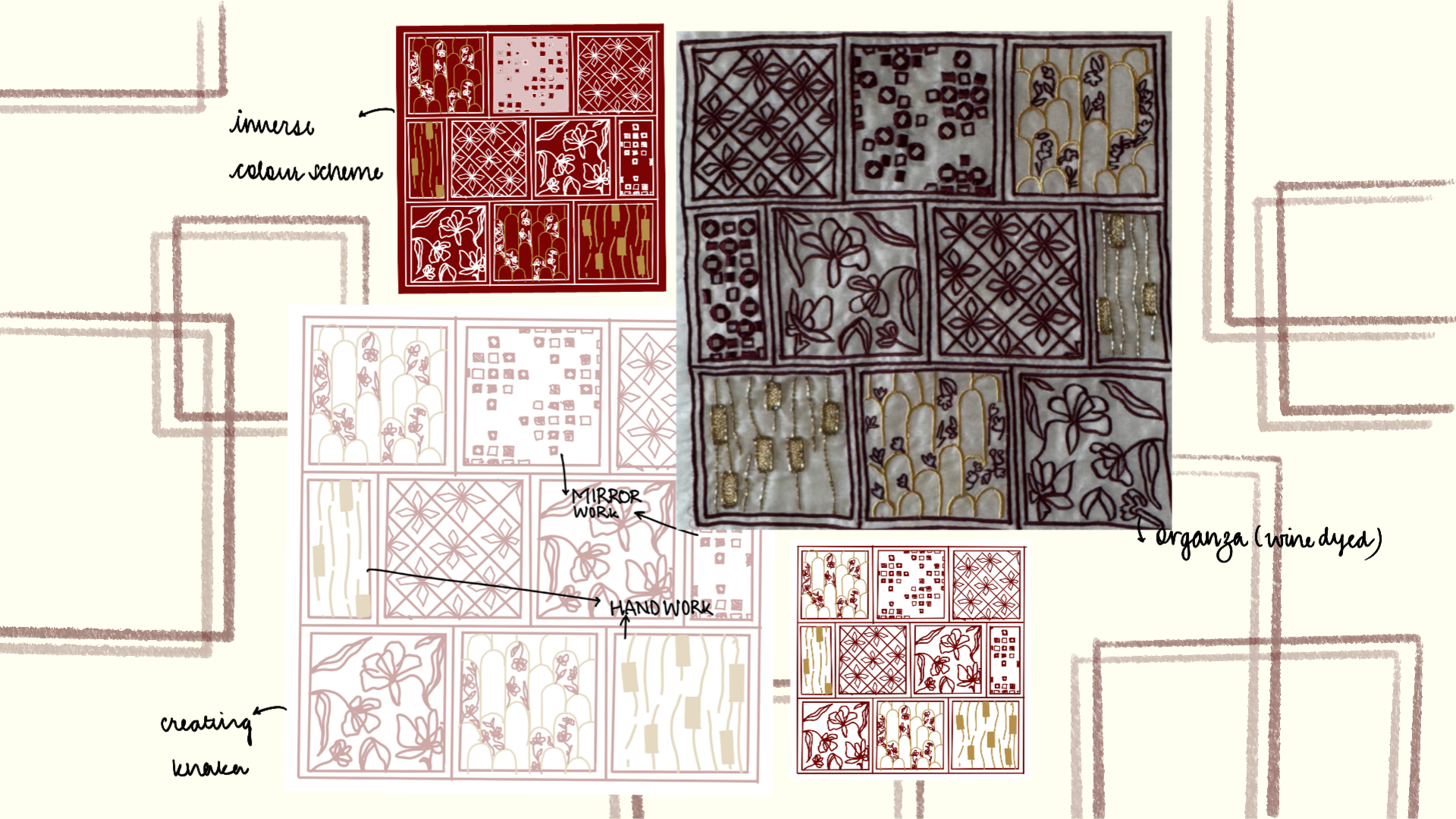
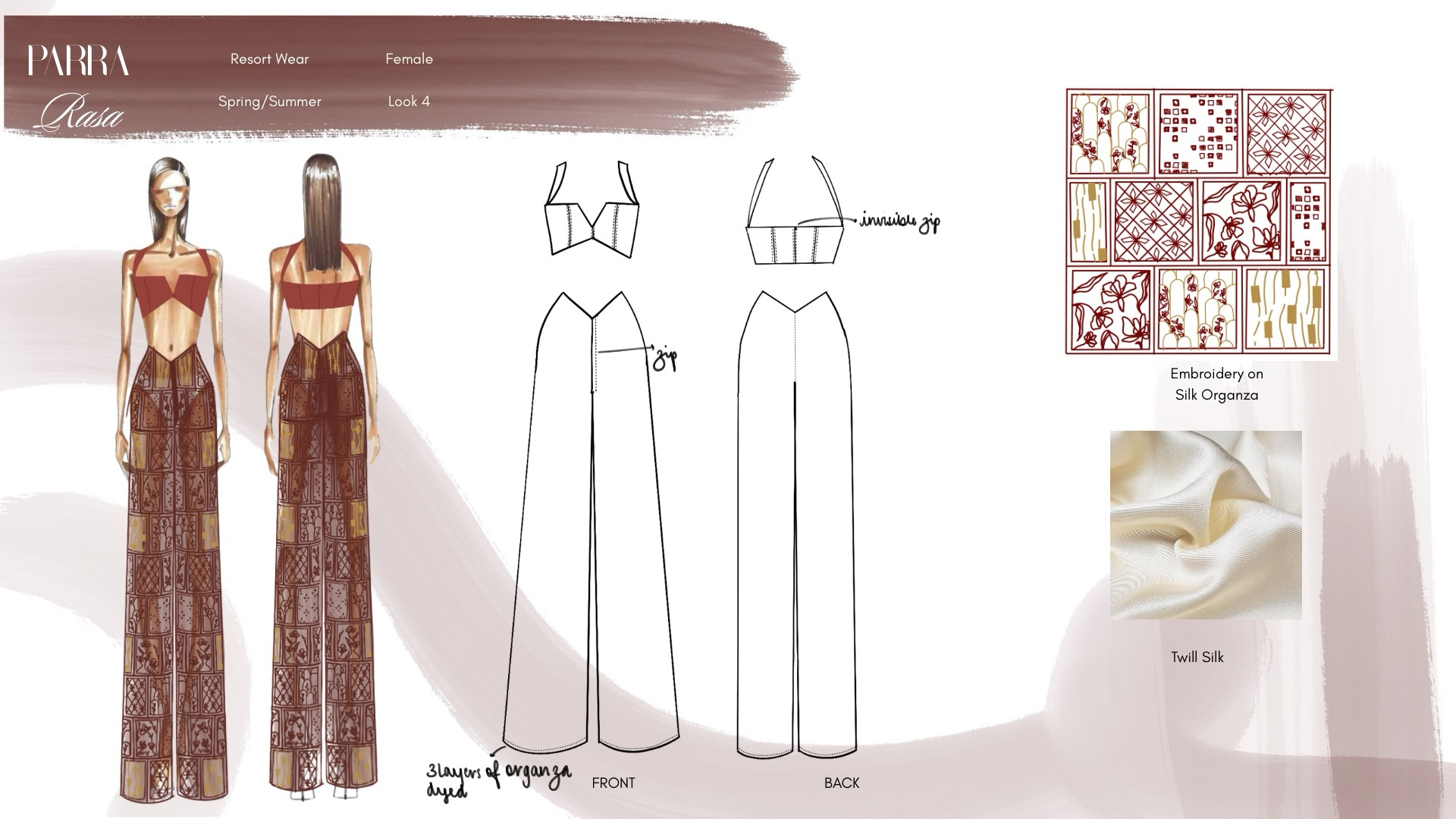
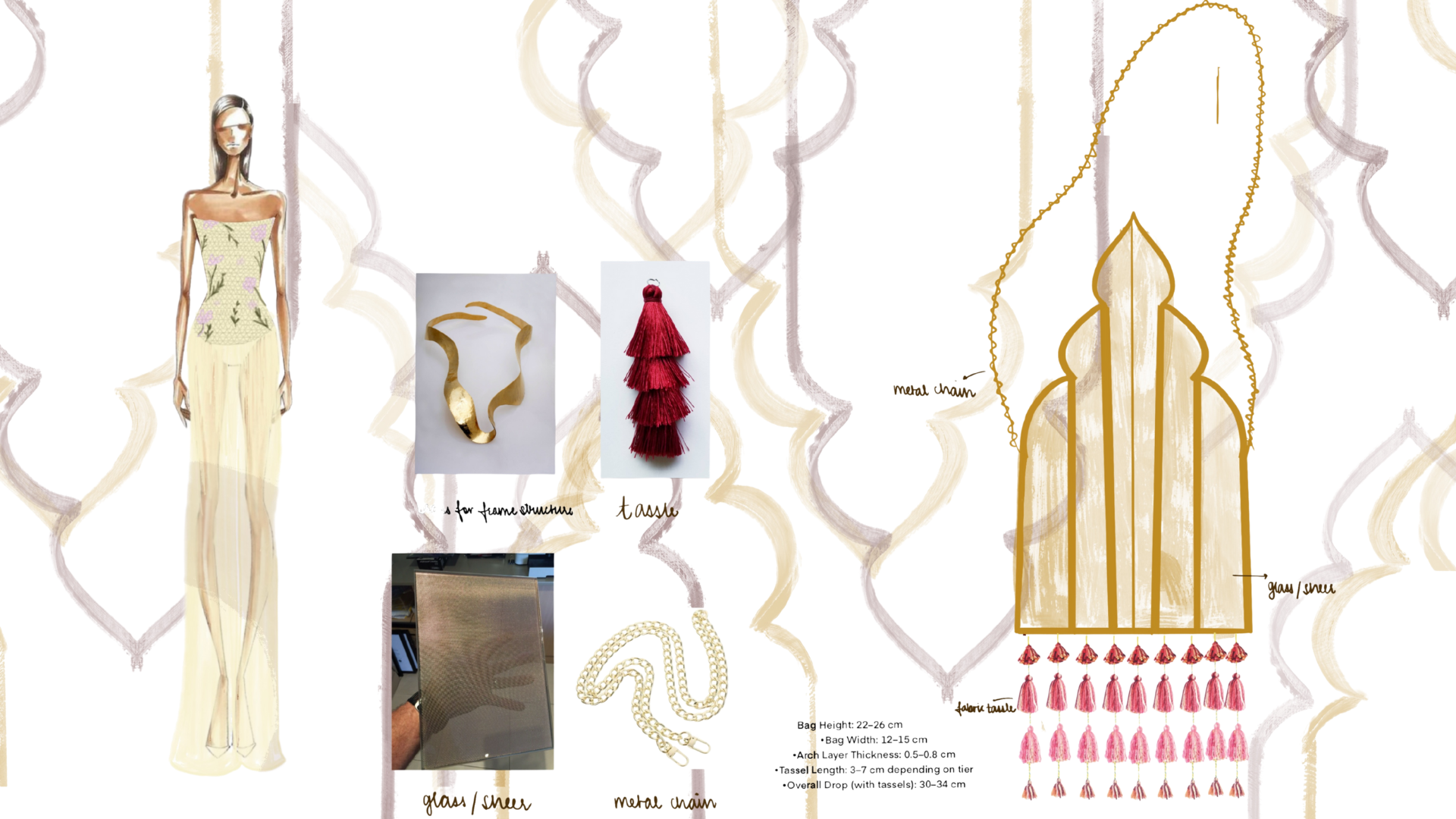
Arches, jaalis, lattice and fort geometry become cut, construction, motif and rhythm rather than copied decoration.
Nashik, Indian craft and memories of place become a way to ask how heritage can move forward without being frozen.
Designing for the wearer
Primary research
Consumer research exposed a useful tension: many Indian wearers are interested in sensual resort dressing, but want more control over exposure, styling and context. Those preferences became design constraints, not afterthoughts.
notes carried into the clothes
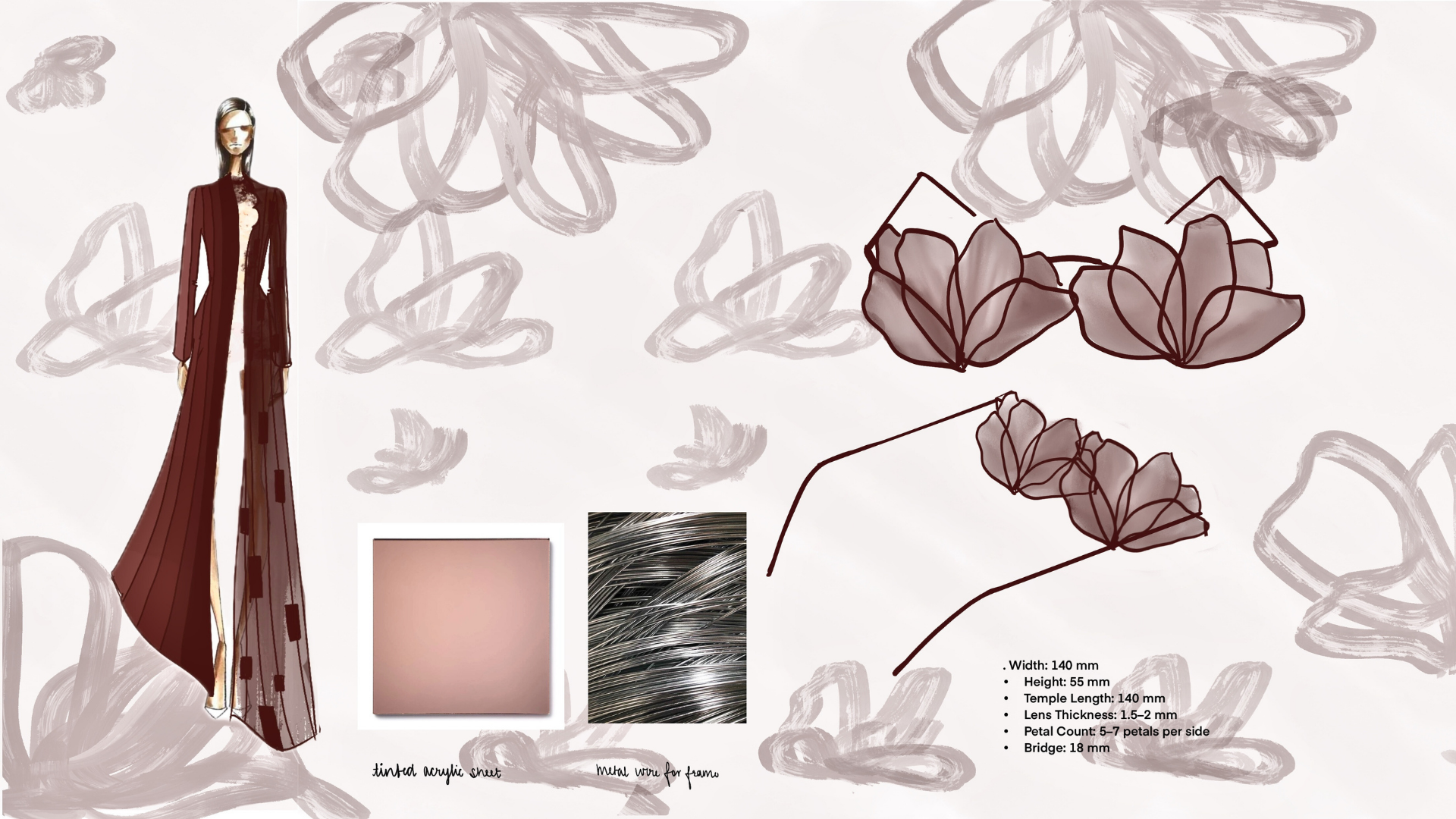
Layering, cover-ups, detachable pieces and convertible components let one garment move between settings.
Longer, fluid forms balance modesty with sensuality and respond to how Indian consumers want to dress.
Breathability, pockets and multi-context wear matter as much as image; resort wear has to work beyond the beach.
Material lab
Surface / touch / process
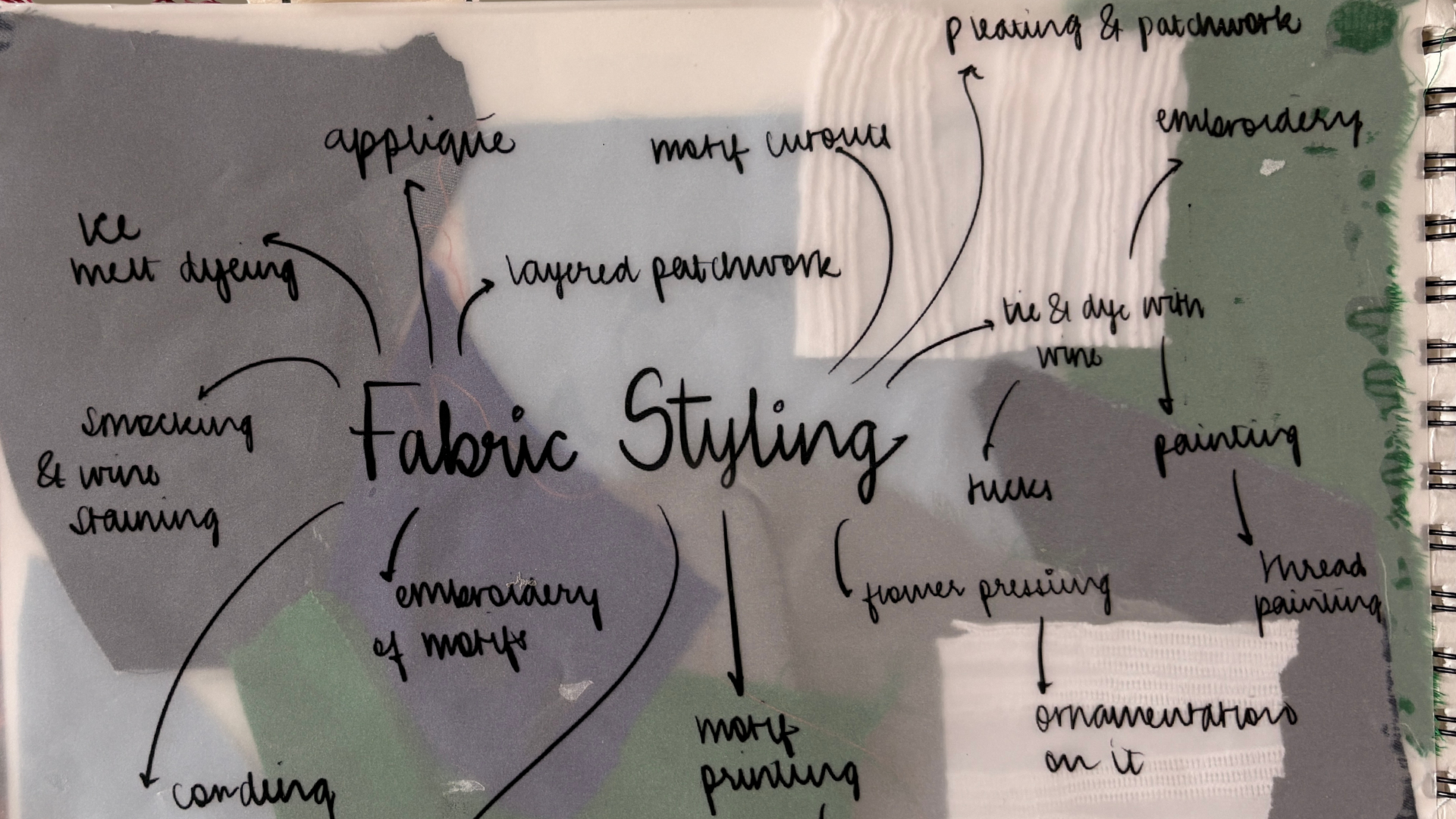
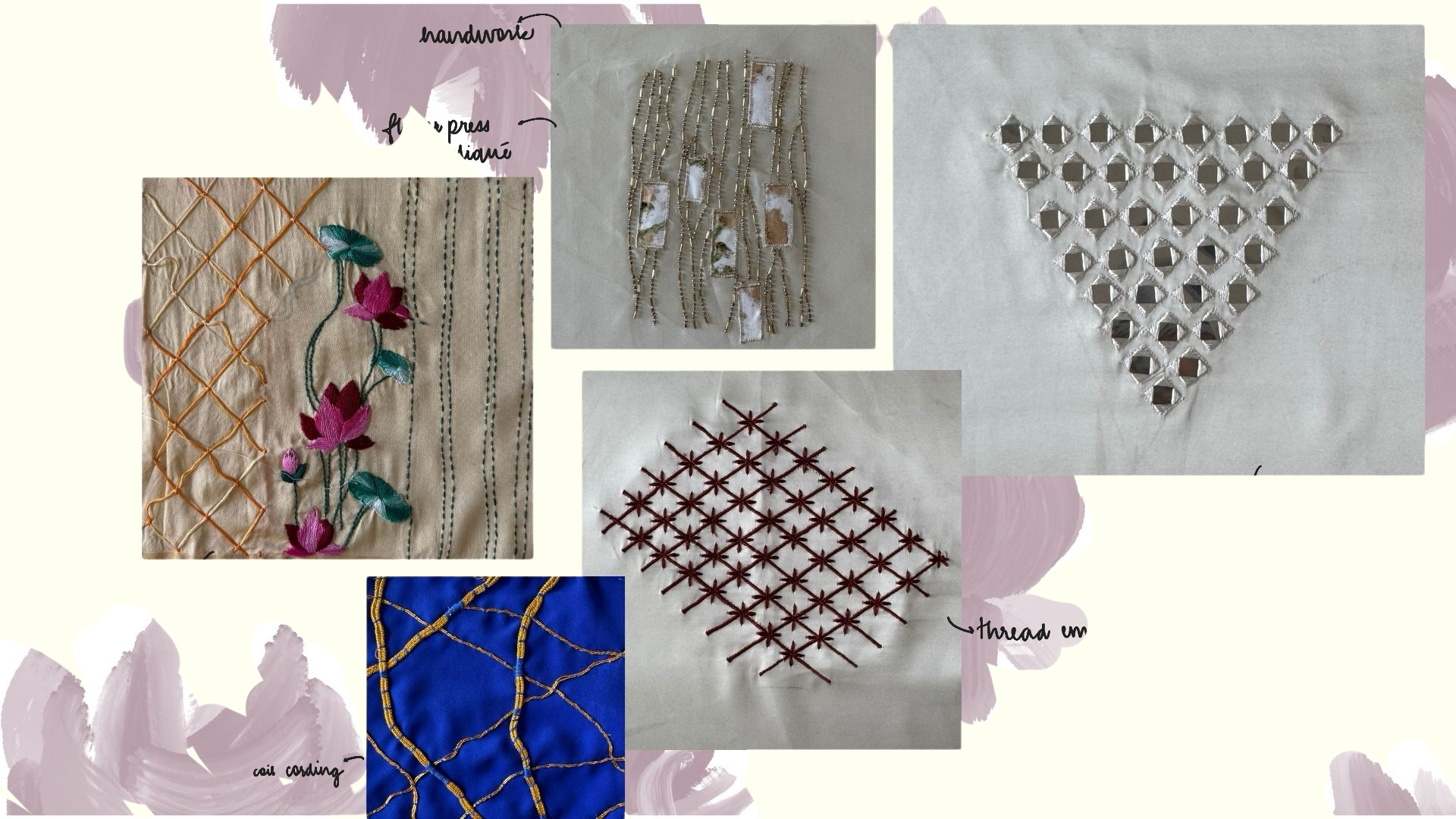
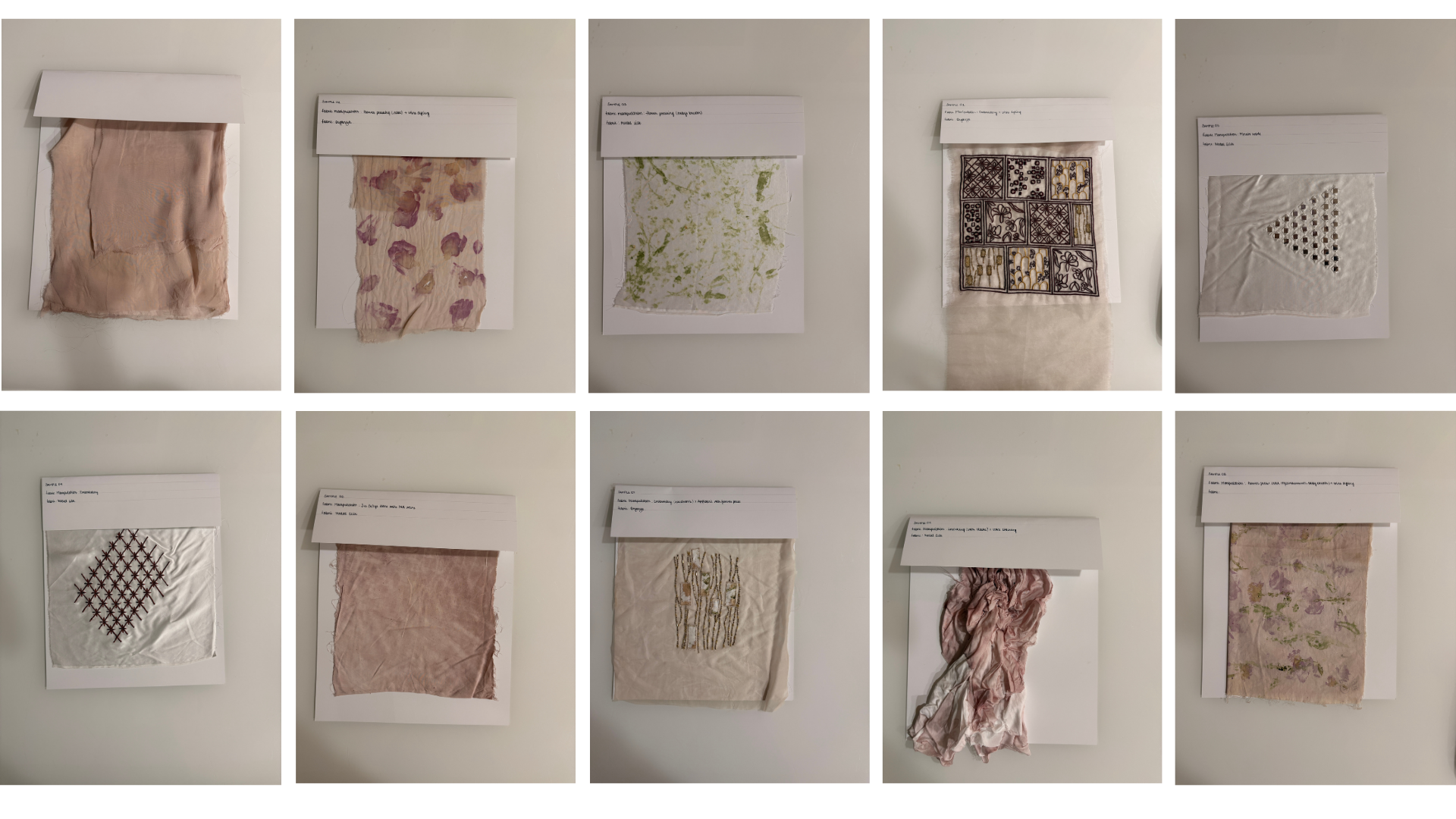
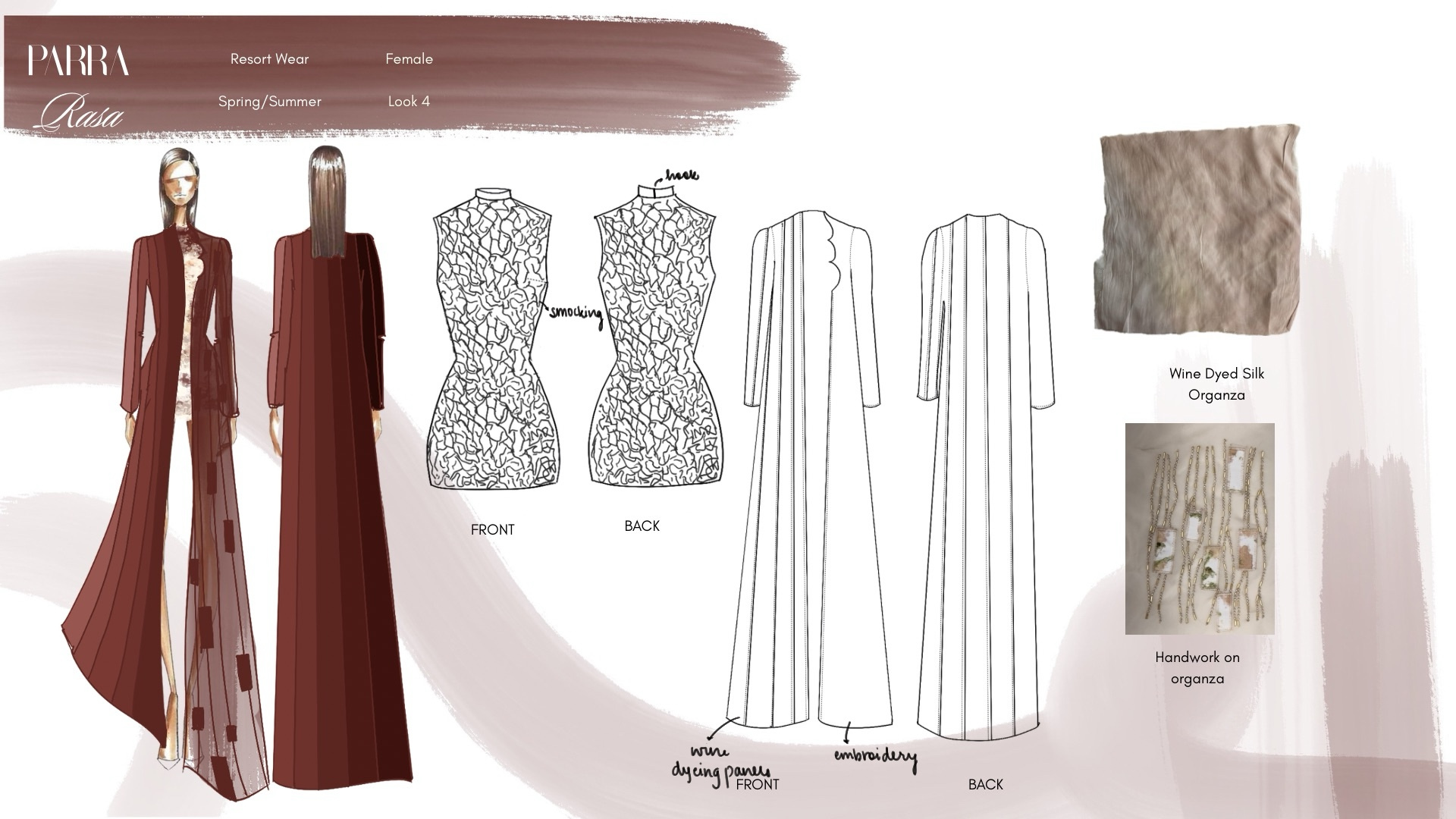
Hand techniques mattered because a perfectly flat surface would contradict the thesis. The collection needed evidence of pressure, absorption, labour and irregularity.
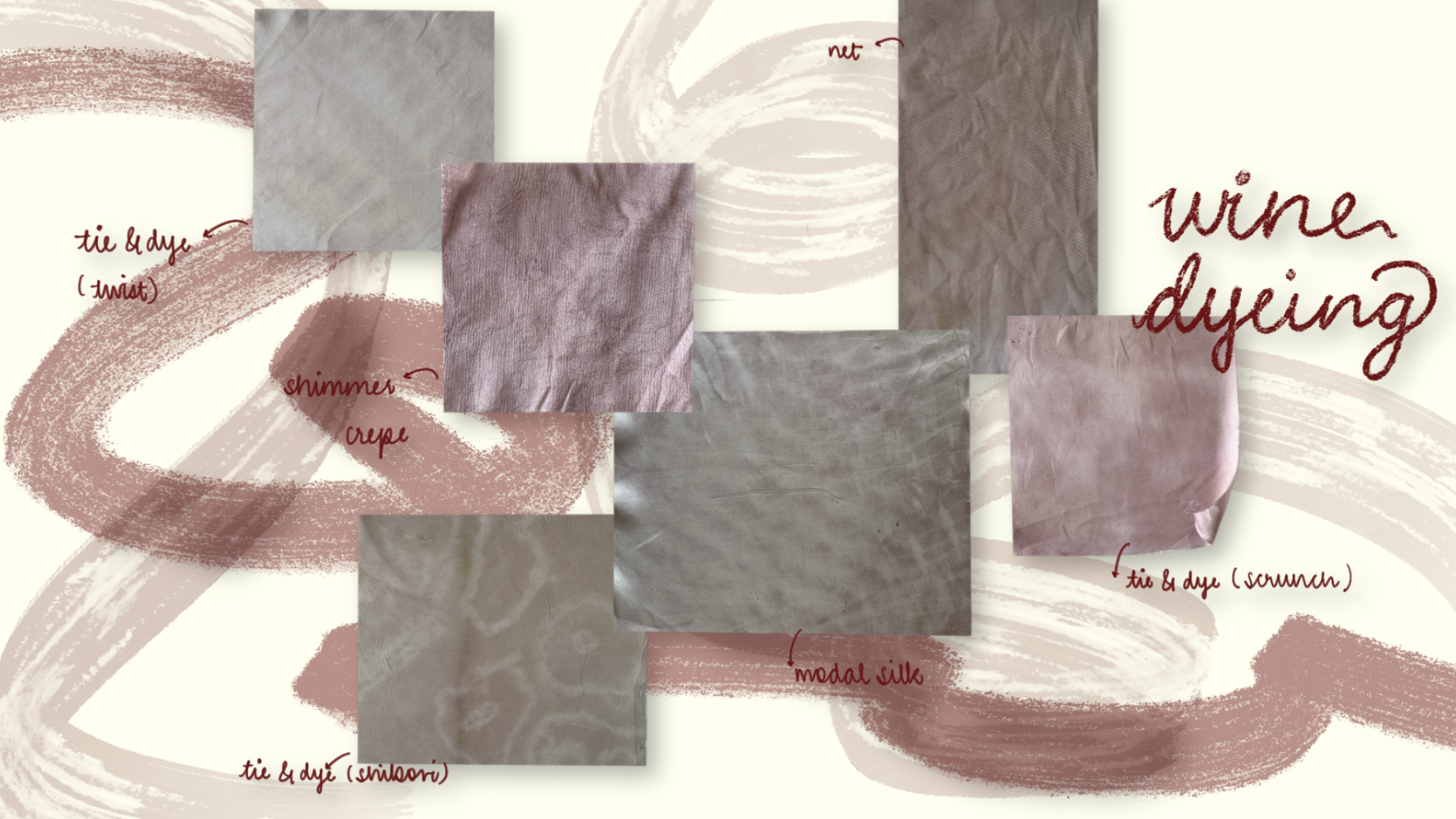
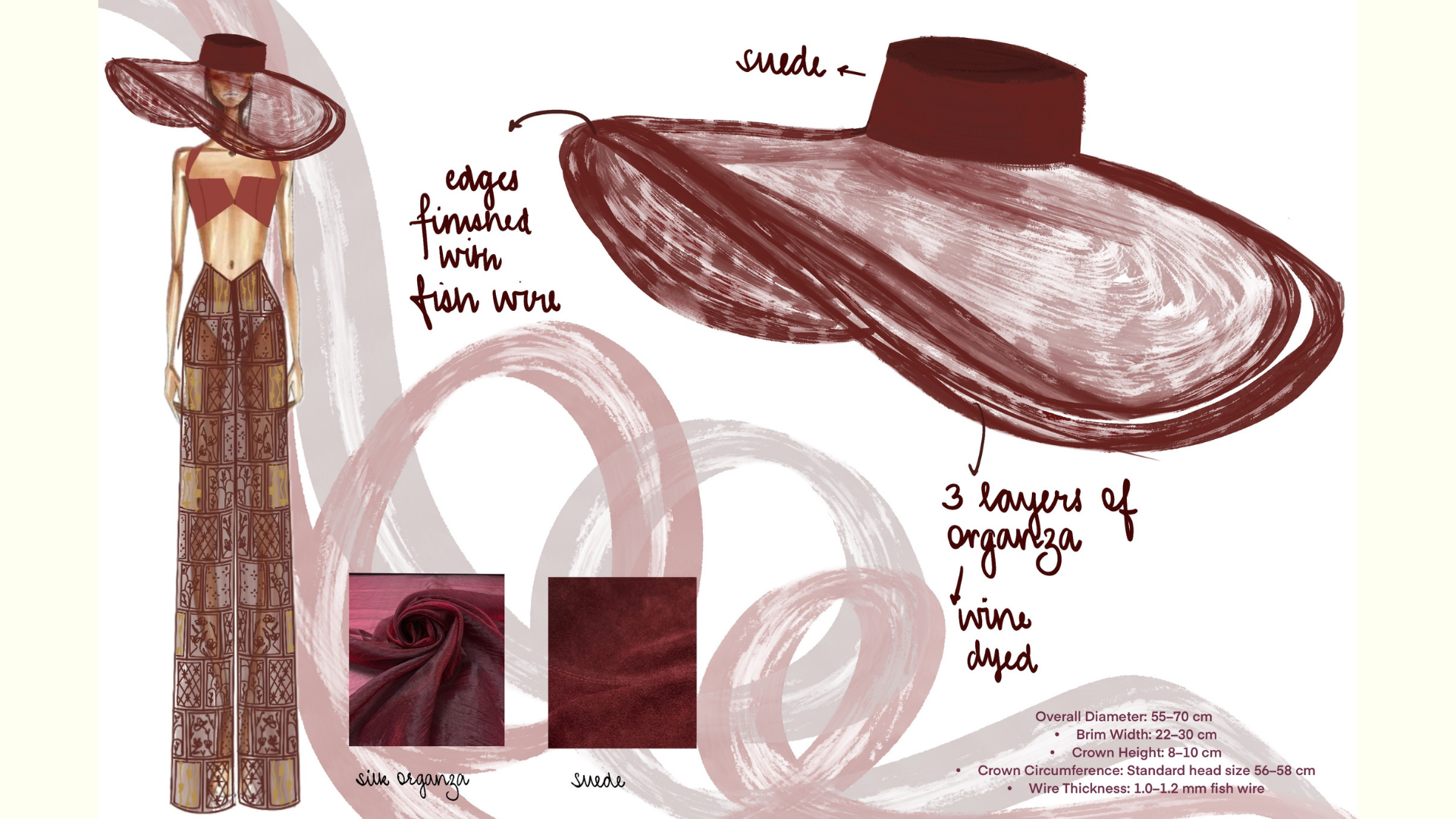
Wine becomes more than a reference: its staining and uneven absorption let time and unpredictability enter the cloth.
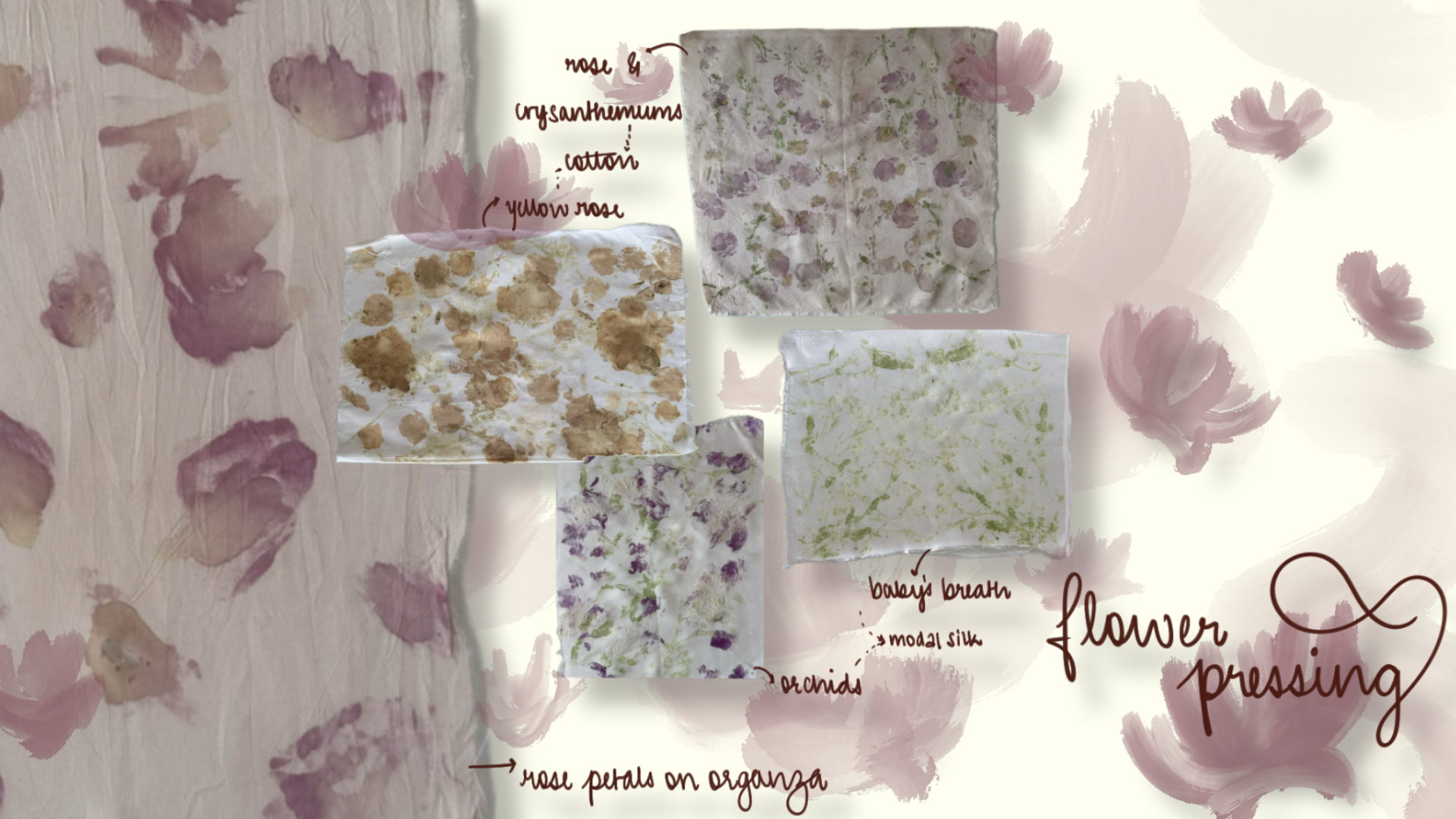
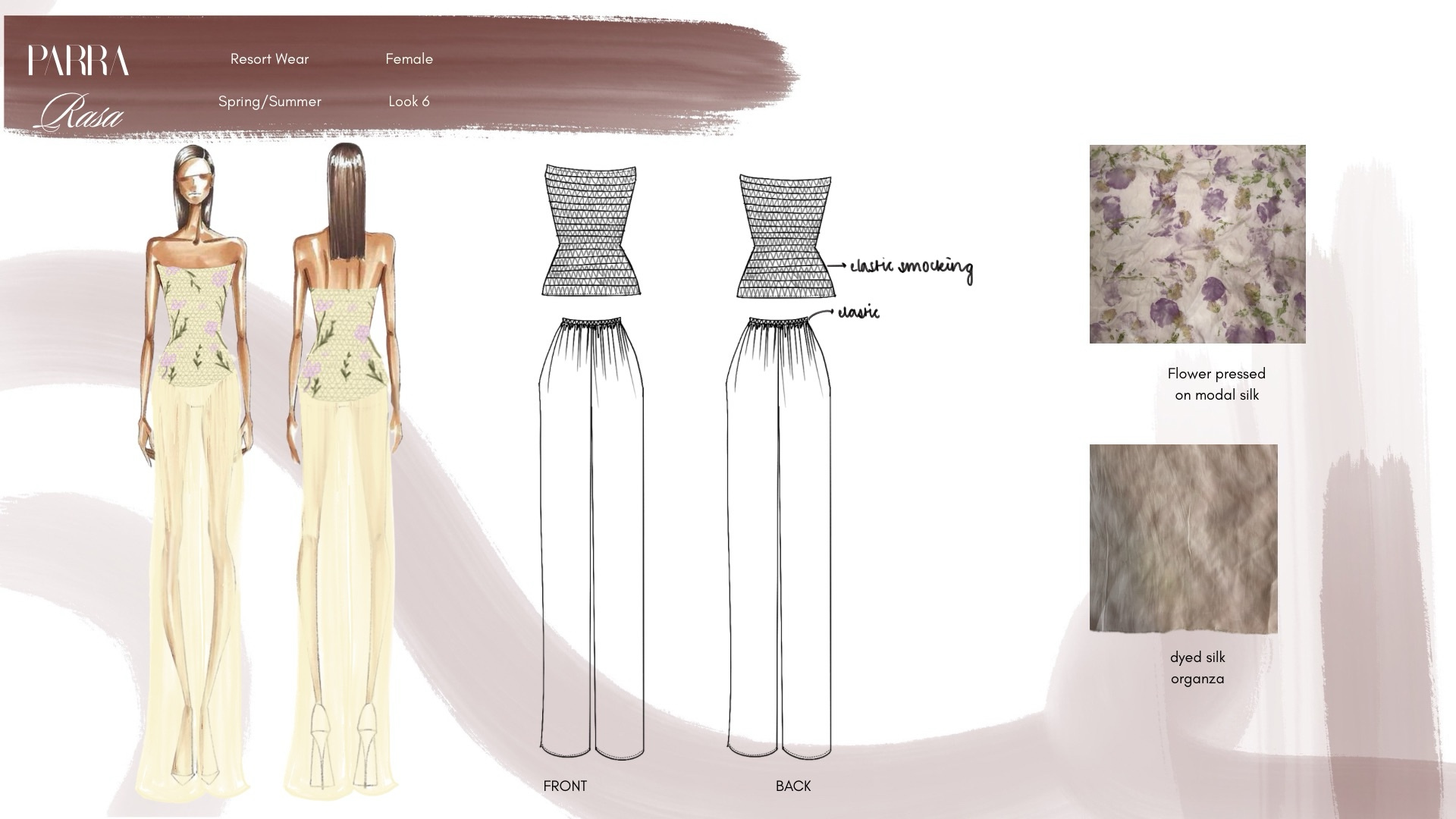
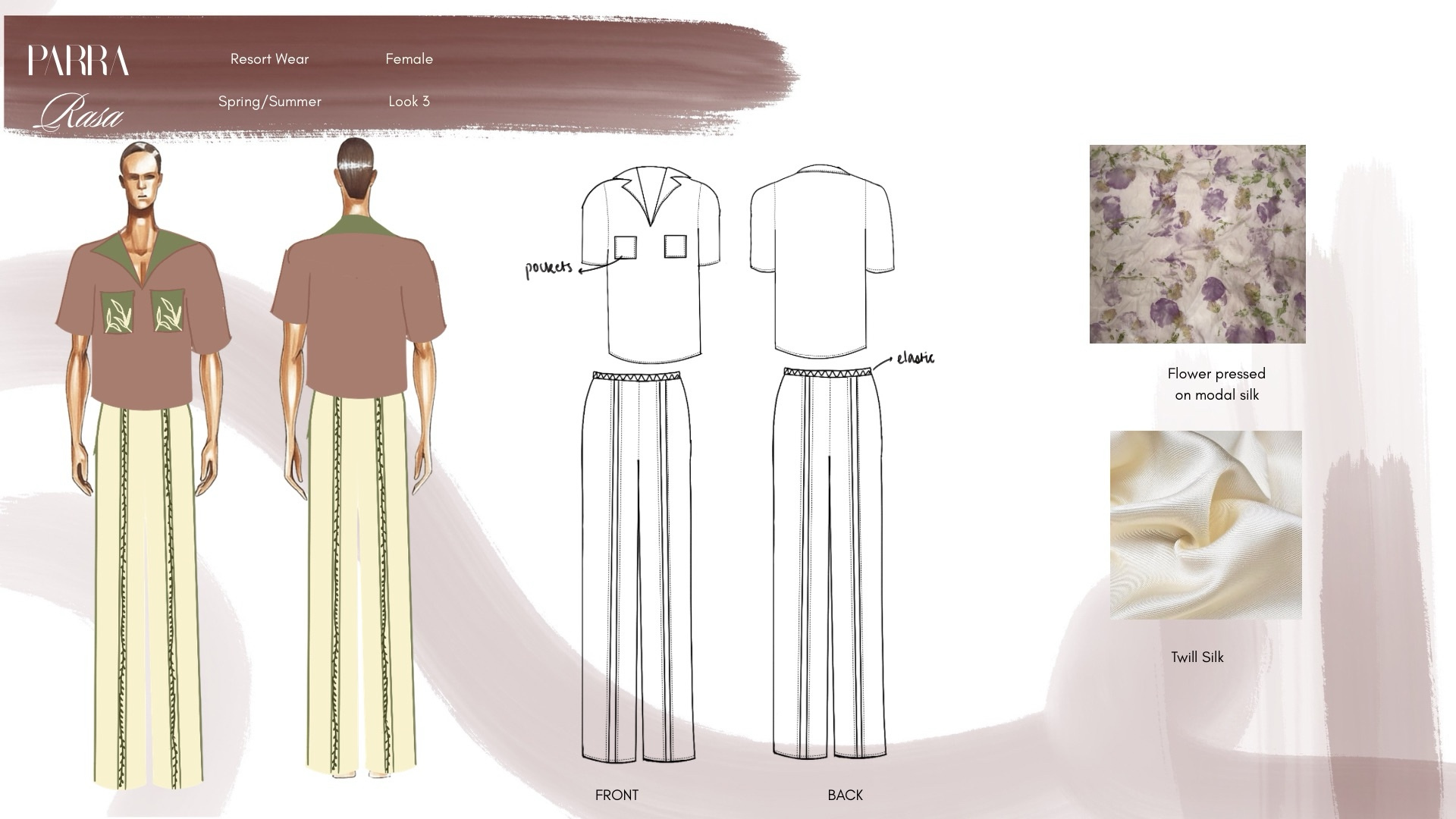
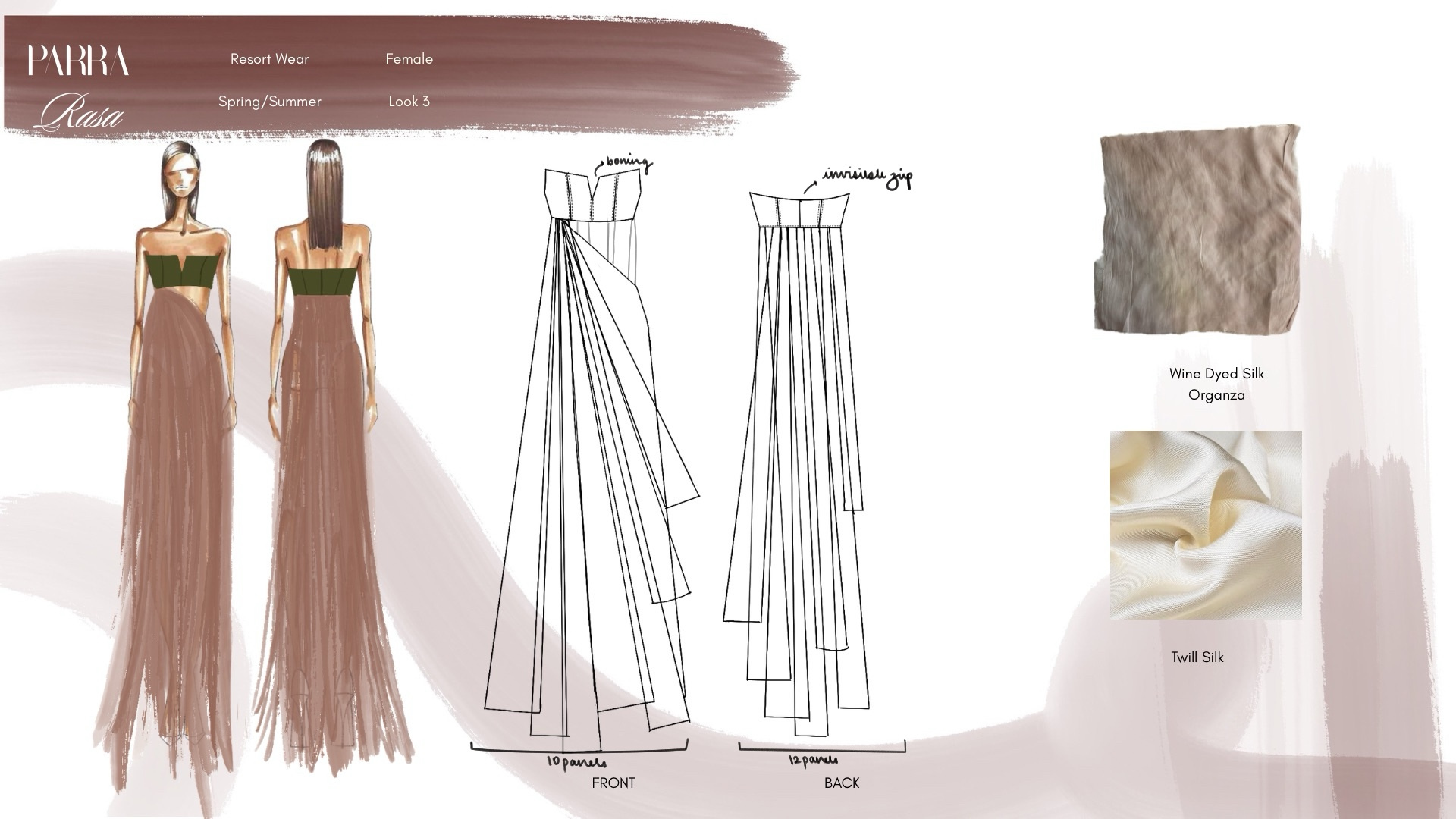
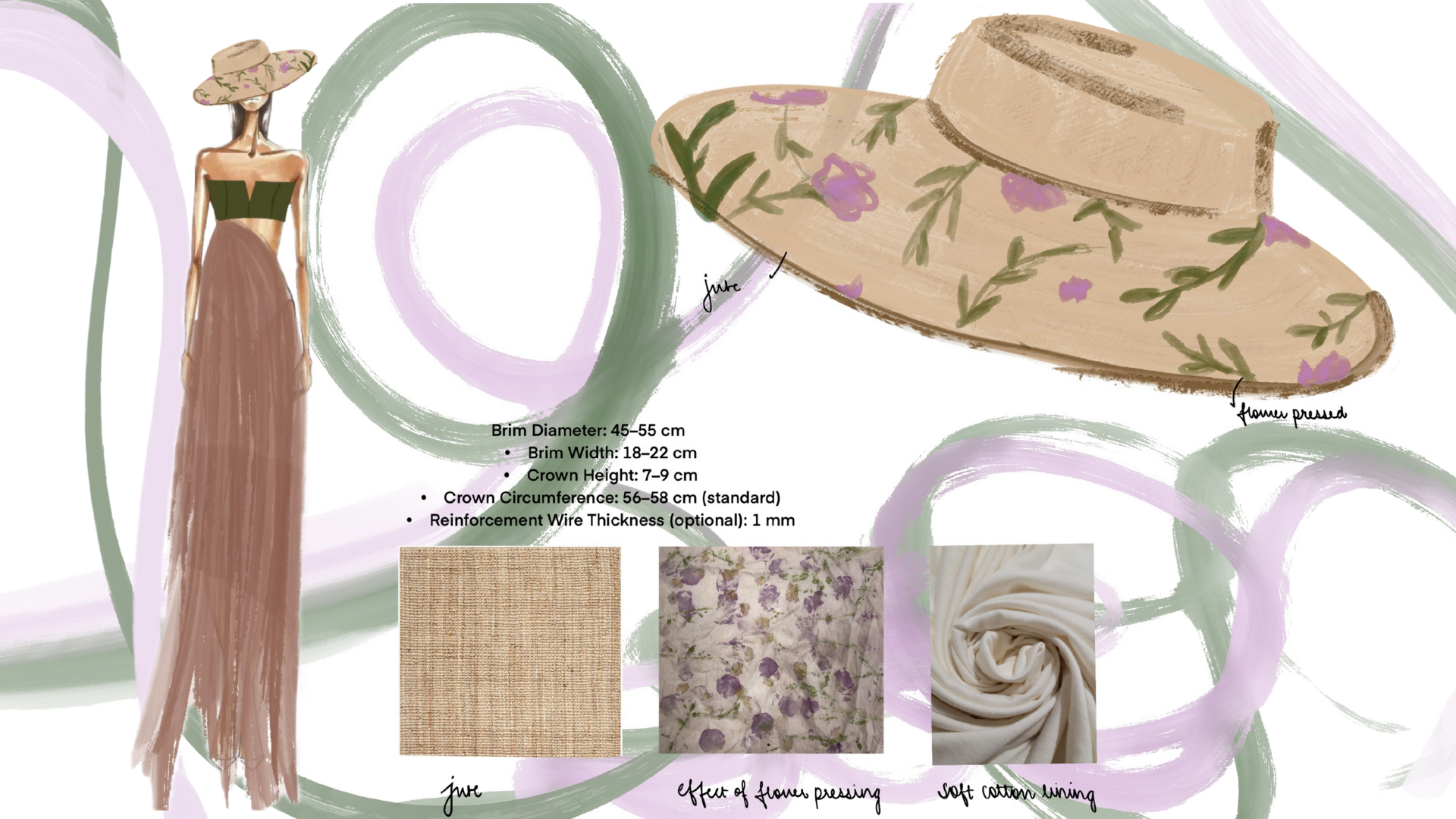
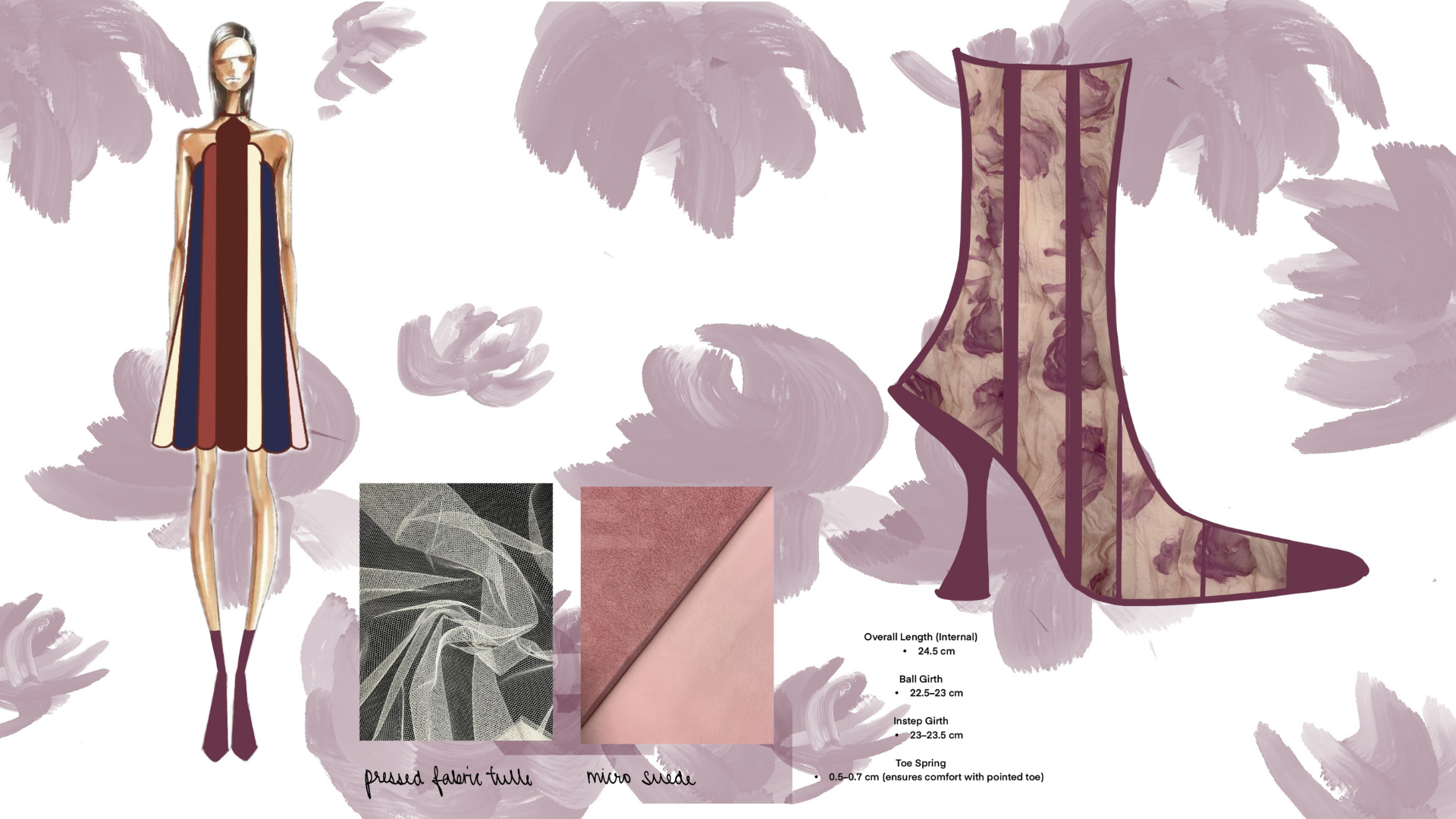
Botanical impressions soften the architectural language, leaving dispersed, imperfect marks on modal silk and organza.
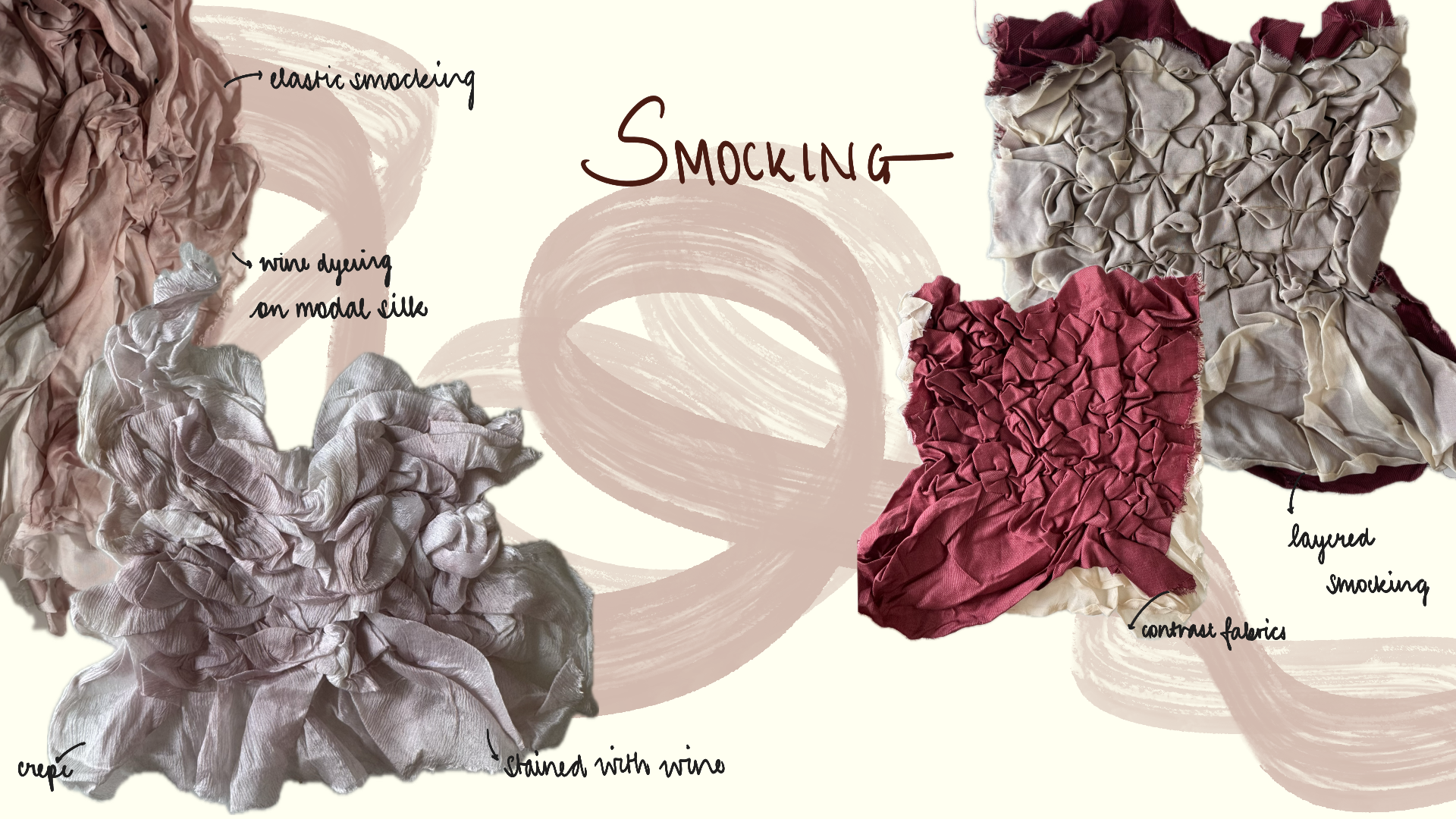
Smocking, cording and stitched lines translate lattice, rhythm and volume into surfaces that still move with the body.
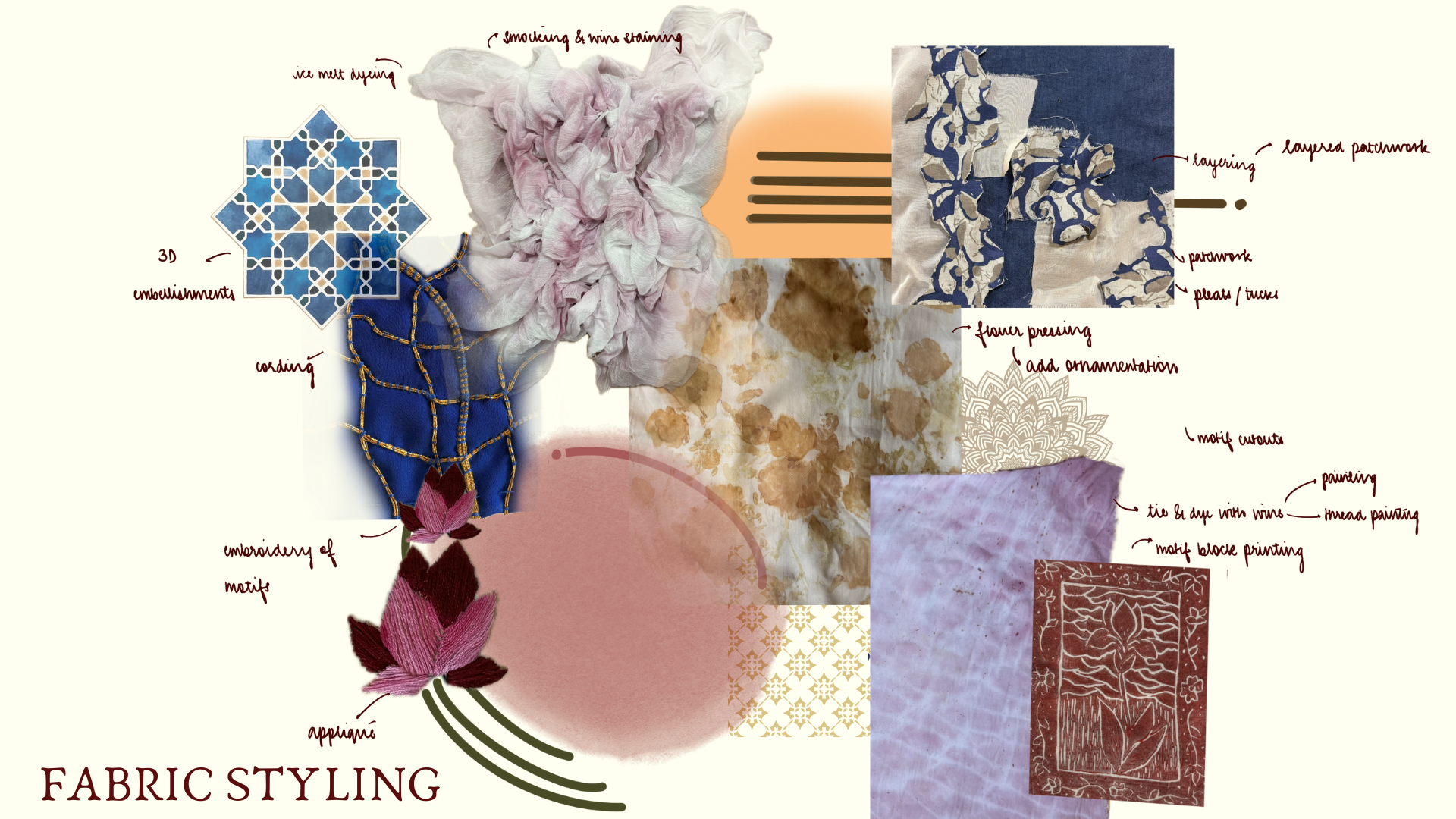
Jharokhas, jaalis, arches and geometric interlocks are reduced, repeated and deconstructed rather than reproduced literally.
Design development
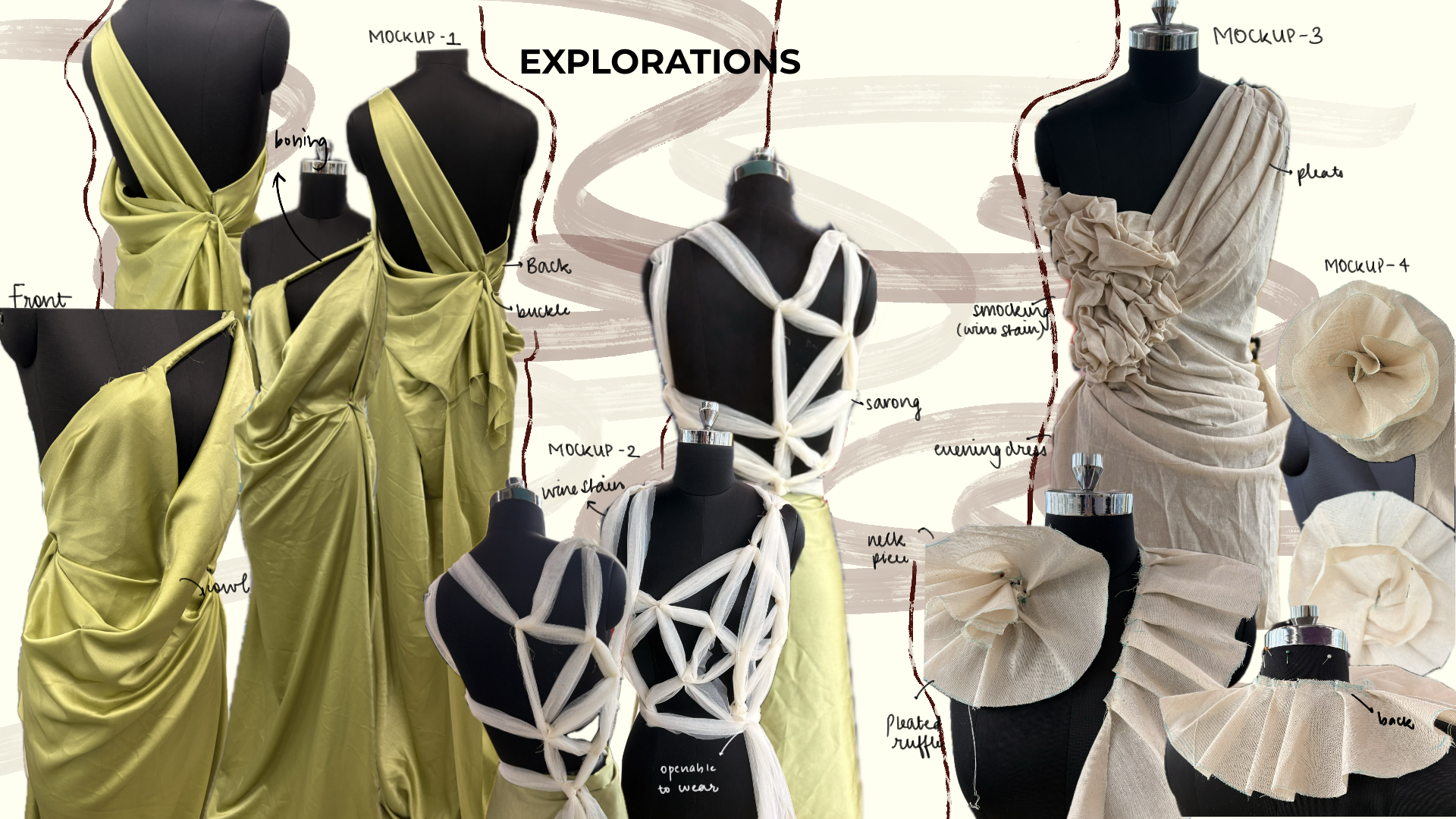
Architectural references establish control and proportion; wine dyeing, flower pressing and drape introduce softness, irregularity and chance. The garments emerge from the friction between those systems.
The collection
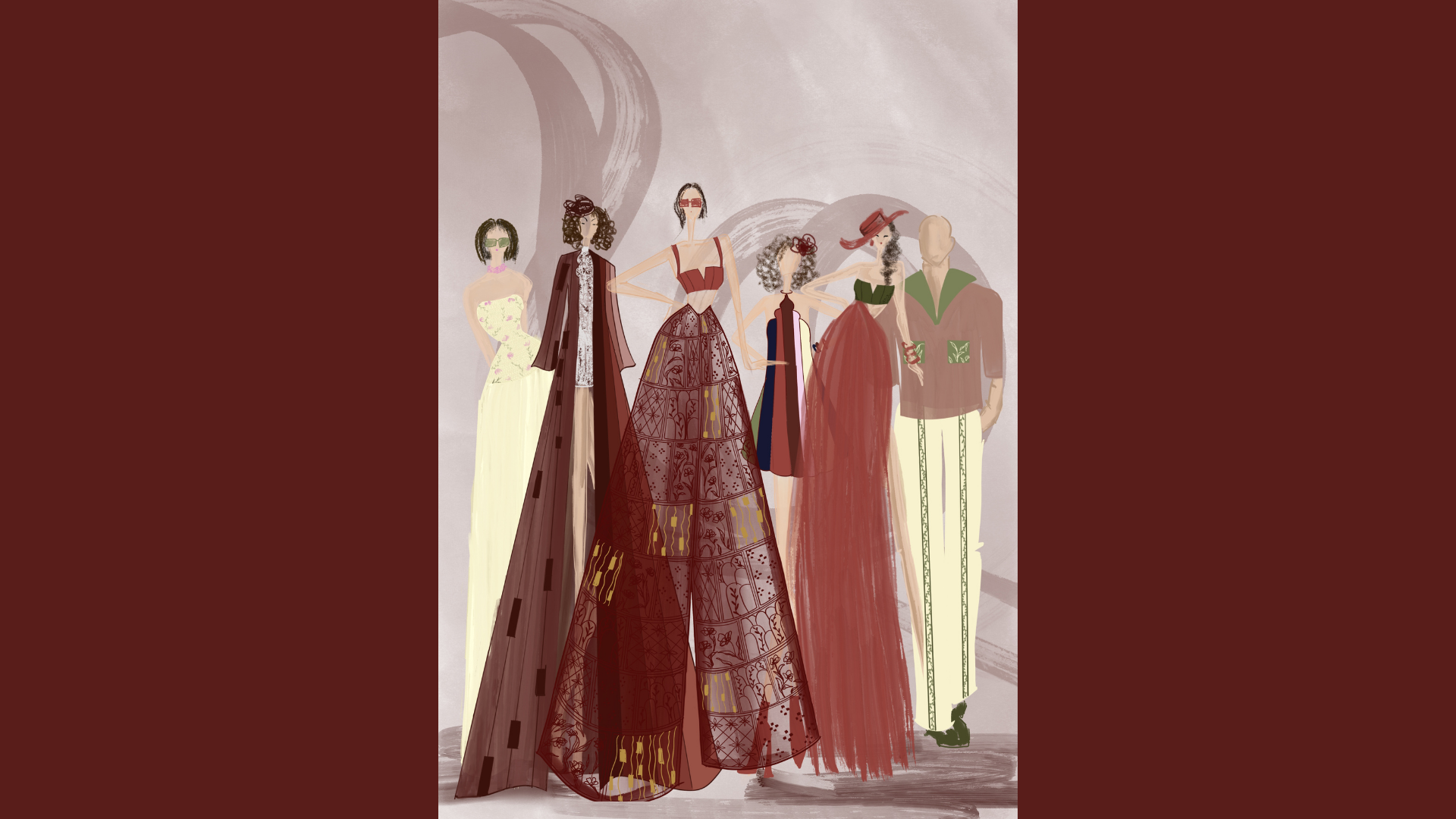
Final outcome / collection photography
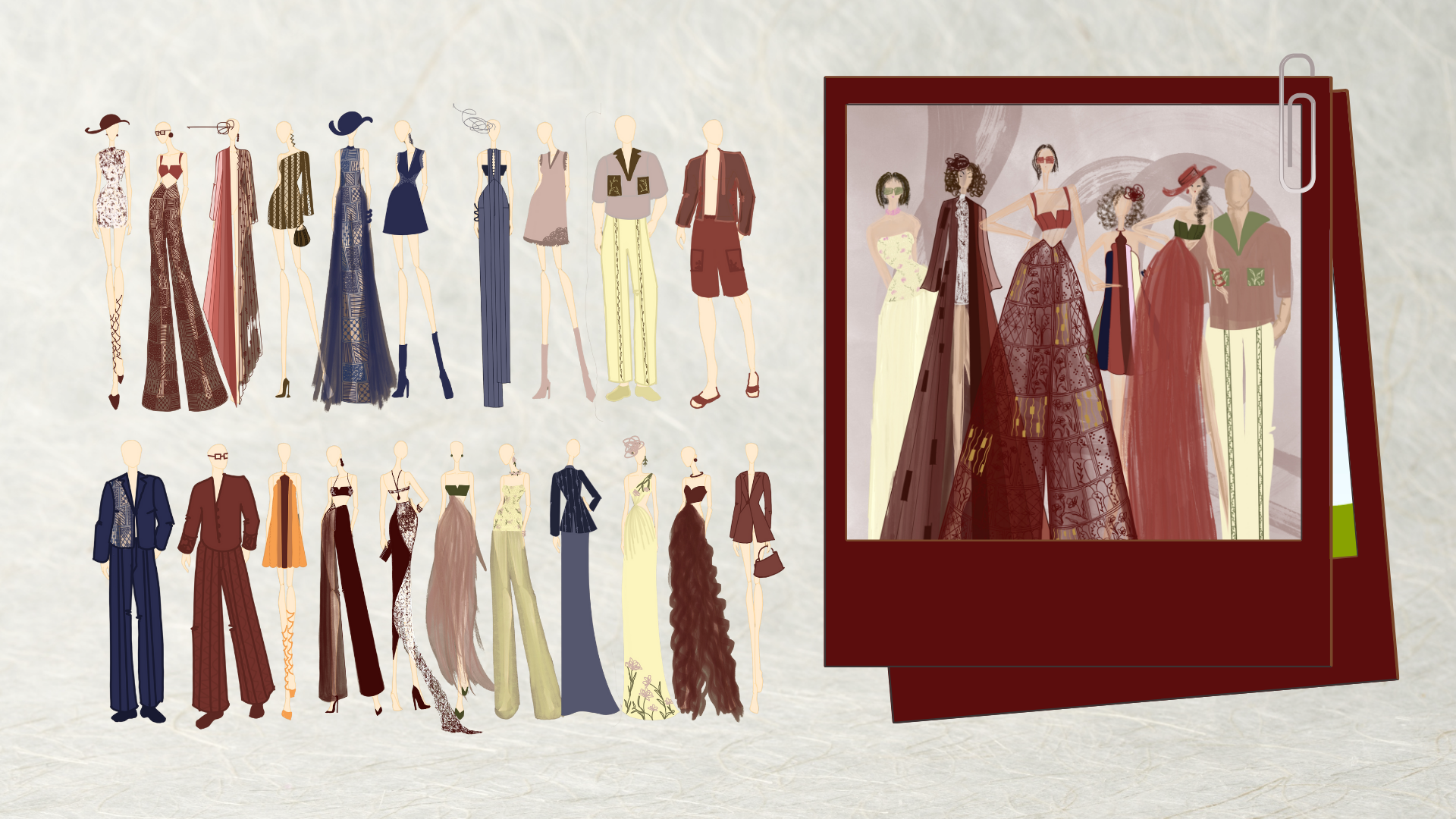
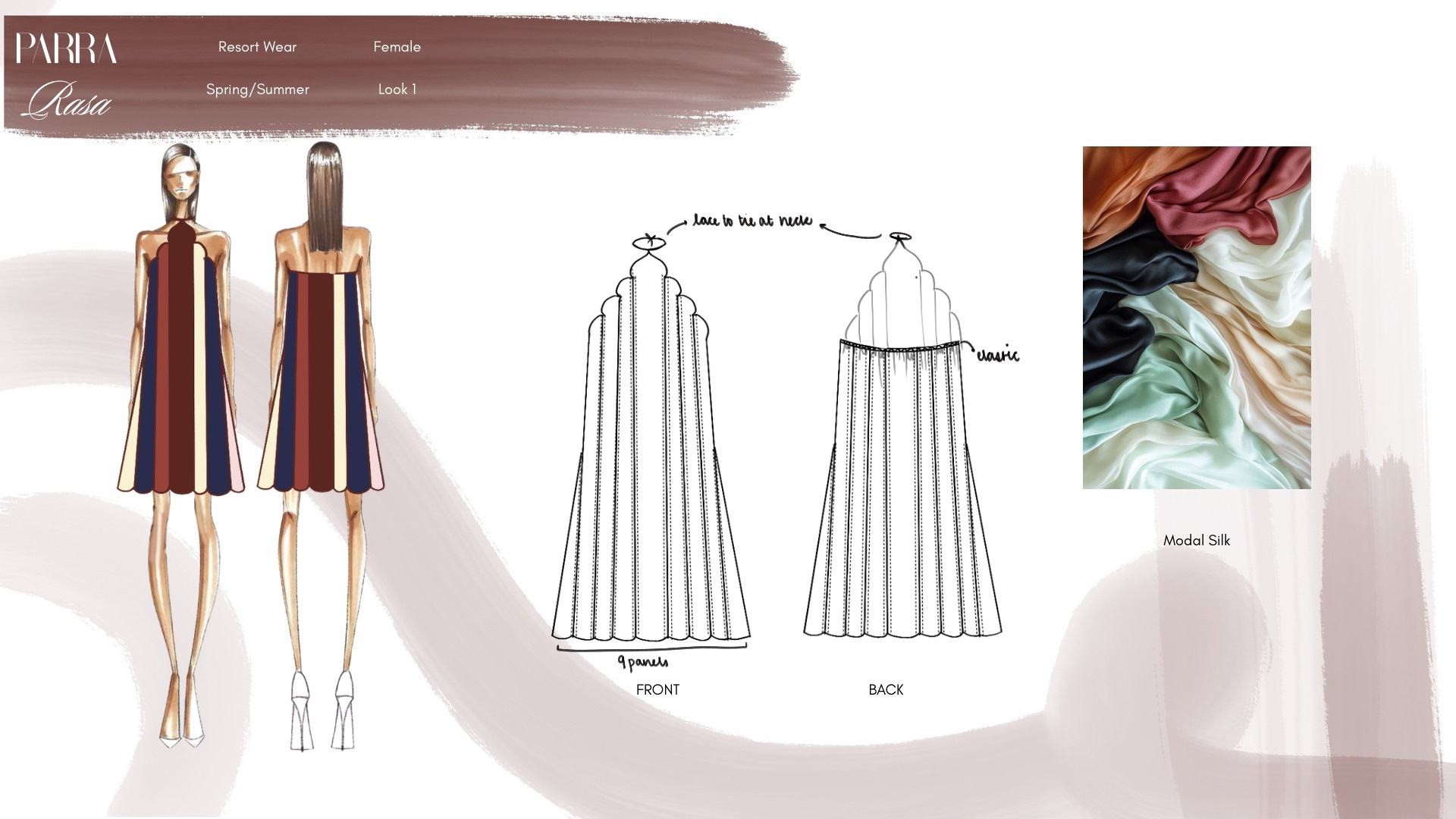
The finished collection carries the same conversation at full scale: wine and blush, cream and earth, fluidity against structure, botanical softness against architectural line.
Thesis book / final chapter
A short sequence from the thesis book: premise, material language, development and final outcome. Open the complete book for the full 84-page document.